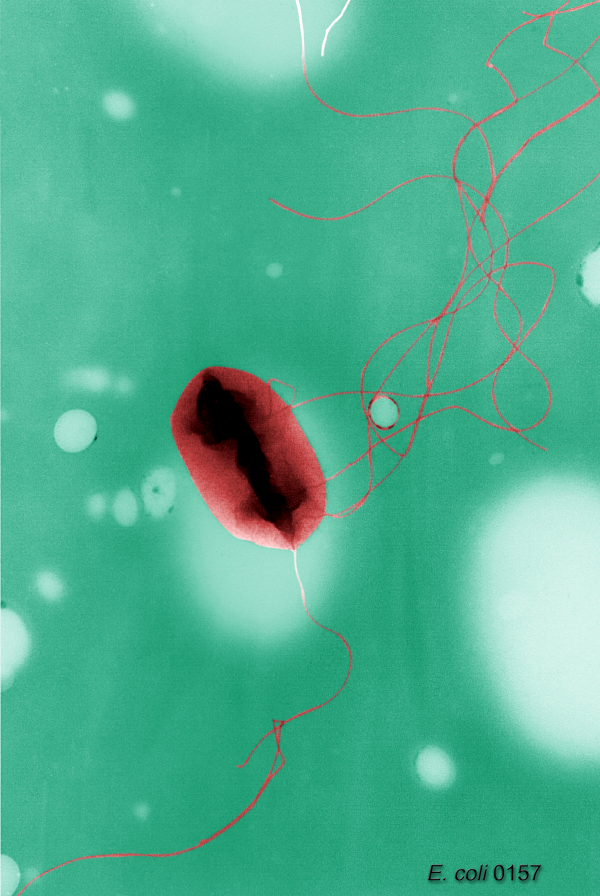
Escherichia coli MS 21-1

Gram-negativeRodMotileFacultative anaerobe

Kingdom

Pseudomonadati

Phylum

Pseudomonadota

Class

Gammaproteobacteria

Order

Enterobacterales

Family

Enterobacteriaceae

Genus

Escherichia

Description

Escherichia coli MS 21-1 is a gram-negative, rod-shaped bacterium that thrives in moderate temperatures, classifying it as a mesophile. This microbe is a chemoheterotroph, utilizing organic compounds for growth and deriving energy from chemical processes, making it reliant on organic substances in its environment. E. coli MS 21-1 is versatile and can be found in a variety of body sites across different species, primarily inhabiting the intestines of warm-blooded organisms, including humans, where it plays a crucial role in digestion and nutrient absorption. As a gram-negative organism, E. coli MS 21-1 possesses a thin peptidoglycan layer surrounded by an outer membrane containing lipopolysaccharides, which contributes to its pathogenic potential. The rod-shaped morphology allows for swift motility, aided by flagella that enhance its ability to navigate through viscous environments such as intestinal mucus. In terms of oxygen requirements, E. coli MS 21-1 is classified as a facultative anaerobe, meaning it can grow in both the presence and absence of oxygen. This adaptability is key to its survival in various ecological niches, enabling it to thrive in both aerobic and anaerobic conditions. Beyond its role in the gut microbiome, E. coli MS 21-1 has garnered attention in biotechnological applications for its ability to produce valuable metabolites, including biofuels and various biopolymers. Research continues to explore its potential in synthetic biology, leveraging its metabolic pathways to devise innovative solutions in environmental management and health sciences. The versatility and resilience of E. coli MS 21-1 exemplify the complex interactions within microbial ecosystems and highlight its significance in both ecological and industrial contexts.

Taxonomy

KingdomPseudomonadati
PhylumPseudomonadota
ClassGammaproteobacteria
OrderEnterobacterales
FamilyEnterobacteriaceae
GenusEscherichia
SpeciesEscherichia coli
StrainMS 21-1

Profile

Physiology
Gram staining propertiesNegative
ShapeRod
MobilityYes
Flagellar presenceYes
Number of membranes2
Image of Escherichia coli MS 21-1
Image source: Wikipedia/Wikimedia
Ecology, Host, and Life Cycle
Oxygen requirementsFacultative anaerobe
Optimal temperature37
Temperature rangeMesophilic
HabitatHostAssociated
Biotic relationshipFree living
Host(s)Not Available
Cell arrangementPairs - Singles
SporulationNot Available
Energy sourceNot Available
PathogenicityNot Available

Genome Summary

Escherichia coli MS 21-1 E_coli21-1-1.0_Cont1081.5, whole genome

Gene Summary

Adenine Count

1312869 bp

Thymine Count

1307888 bp

Guanine Count

1332865 bp

Cytosine Count

1329301 bp

Genome Length

5282923 bp

Protein-coding Genes

5579 genes

Non-Coding Genes

241 genes

# of Chromosomes/Plasmids

1

Genes

NameLocus TagUniProt IDStrand OrientationGene Start/EndProtein Molecular Weight
hypothetical proteinHMPREF9530_01443Not AvailablePositive1214429 - 12145574616.78
hok/gef family proteinHMPREF9530_01444Q8X7U9Positive1214690 - 12148425603.15
crispr-associated helicase cas3HMPREF9530_01445P38036Positive1215037 - 1217736101865.0
crispr system cascade complex protein casaHMPREF9530_01446Q46901Positive1217820 - 121938859427.0
crispr system cascade complex protein casbHMPREF9530_01447Not AvailablePositive1219385 - 121992120687.6
crispr system cascade complex protein cascHMPREF9530_01448Q46899Positive1219936 - 122099138385.6
crispr system cascade complex protein casdHMPREF9530_01449Q46898Positive1221002 - 122174828653.9
crispr system cascade complex protein caseHMPREF9530_01450Not AvailablePositive1221730 - 122238024755.6
crispr-associated endonuclease cas1HMPREF9530_01451Q46896Positive1222425 - 122330031695.6
crispr-associated endoribonuclease cas2HMPREF9530_01452P45956Positive1223297 - 122359011004.4

Displaying genes 1521 – 1530 of 5820 in total

Metabolites

4788 records
Metabolite IDMetabolite nameStructureCAS number
BASm0000173(R)-3-Hydroxybutyric acidC4H8O3Chemical structure of (R)-3-Hydroxybutyric acid625-72-3
Average104.0473Da
Monoisotopic104.047344122Da
BASm0000217alpha-ribazoleC14H18N2O4Chemical structure of alpha-ribazoleNot available
Average278.3037Da
Monoisotopic278.126657074Da
BASm0000237(R)-4'-phosphopantothenateC9H18NO8PChemical structure of (R)-4'-phosphopantothenateNot available
Average299.2149Da
Monoisotopic299.0770031Da
BASm0000238(R)-3-phenyllactateC9H9O3Chemical structure of (R)-3-phenyllactateNot available
Average165.169Da
Monoisotopic165.05571773Da
BASm00002482,3-dihydroxy-3-methylbutanoateC5H10O4Chemical structure of 2,3-dihydroxy-3-methylbutanoate1756-18-9
Average134.1305Da
Monoisotopic134.0579088Da
BASm00002502,5-didehydro-D-gluconateC6H7O7Chemical structure of 2,5-didehydro-D-gluconate53736-12-2
Average191.1156Da
Monoisotopic191.019177578Da
BASm00002512-dehydropantoateC6H9O4Chemical structure of 2-dehydropantoateNot available
Average145.1333Da
Monoisotopic145.050083776Da
BASm00002532-oxopent-4-enoateC5H5O3Chemical structure of 2-oxopent-4-enoateNot available
Average113.093Da
Monoisotopic113.024417601Da
BASm00002593alpha,12alpha-dihydroxy-7-oxo-5beta-cholanateC24H37O5Chemical structure of 3alpha,12alpha-dihydroxy-7-oxo-5beta-cholanateNot available
Average405.556Da
Monoisotopic405.264647871Da
BASm00002603alpha,7alpha-dihydroxy-12-oxo-5beta-cholanateC24H37O5Chemical structure of 3alpha,7alpha-dihydroxy-12-oxo-5beta-cholanateNot available
Average405.556Da
Monoisotopic405.264647871Da

Displaying 1–10 of 4788 metabolites

Health Effects

No health effects information available for this bacterium.