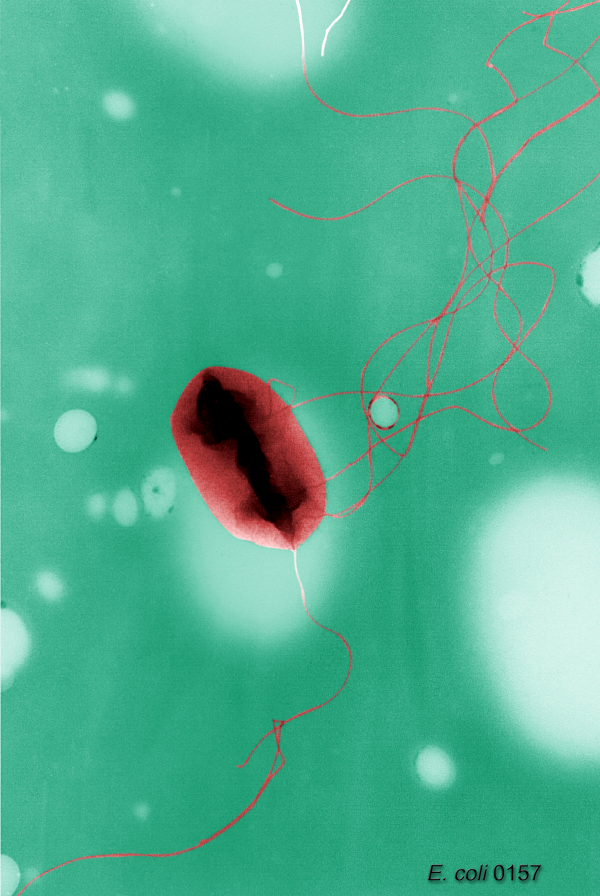
Escherichia coli S88

Gram-negativeRodNon-motileFacultative anaerobe

Kingdom

Pseudomonadati

Phylum

Pseudomonadota

Class

Gammaproteobacteria

Order

Enterobacterales

Family

Enterobacteriaceae

Genus

Escherichia

Description

Escherichia coli S88 is a gram-negative, rod-shaped bacterium that thrives in mesophilic conditions, exhibiting a temperature preference typically between 20°C and 45°C. Classified as a chemoheterotroph, E. coli S88 obtains its nutrients from organic compounds, allowing it to grow efficiently in various environments, including the gastrointestinal tracts of warm-blooded animals. As a facultative anaerobe, this microbe can survive both in the presence and absence of oxygen, utilizing aerobic respiration when oxygen is available, and switching to fermentation or anaerobic respiration when it is not. The E. coli S88 strain is predominantly found in the intestines of humans and other mammals, where it plays a crucial role in digestion and maintaining gut health. This strain, like other E. coli varieties, can also inhabit diverse environments beyond the intestine, including soil, water, and animal waste, which contributes to its important role in the ecosystem as a decomposer of organic material. E. coli S88 is often studied for its potential applications in biotechnology and microbial ecology due to its rapid growth rate and genetic manipulability. It is widely used as a model organism in molecular biology, especially in studies involving gene cloning, protein expression, and metabolic pathways, owing to its well-characterized genome. Furthermore, certain pathogenic strains of E. coli are known to cause foodborne illnesses, but E. coli S88 itself is typically non-pathogenic and serves as an essential component of the microbiome. Its versatility and adaptability render it a key player in both environmental and medical microbiology research.

Taxonomy

KingdomPseudomonadati
PhylumPseudomonadota
ClassGammaproteobacteria
OrderEnterobacterales
FamilyEnterobacteriaceae
GenusEscherichia
SpeciesEscherichia coli
StrainS88

Profile

Physiology
Gram staining propertiesNegative
ShapeRod
MobilityNo
Flagellar presenceYes
Number of membranes2
Image of Escherichia coli S88
Image source: Wikipedia/Wikimedia
Ecology, Host, and Life Cycle
Oxygen requirementsFacultative anaerobe
Optimal temperature37
Temperature rangeMesophilic
HabitatMultiple
Biotic relationshipFree living
Host(s)Not Available
Cell arrangementPairs - Singles
SporulationNonsporulating
Energy sourceNot Available
PathogenicityYes

Genome Summary

Escherichia coli S88 plasmid pECOS88, complete sequence.

Gene Summary

Adenine Count

34503 bp

Thymine Count

33370 bp

Guanine Count

34203 bp

Cytosine Count

31777 bp

Genome Length

133853 bp

Protein-coding Genes

139 genes

Non-Coding Genes

0 genes

# of Chromosomes/Plasmids

2

Genes

NameLocus TagUniProt IDStrand OrientationGene Start/EndProtein Molecular Weight
hypothetical proteinECS88_RS27520Q47719Positive4825416 - 48256739464.18
fe(3+) dicitrate abc transporter atp-binding protein feceECS88_RS25920P15031Negative4826231 - 482699828192.5
fe(3+) dicitrate abc transporter permease subunit fecdECS88_RS25925P15029Negative4826999 - 482795534152.7
iron-dicitrate abc transporter permease feccECS88_RS25930P15030Negative4827952 - 482895034894.9
fe(3+) dicitrate abc transporter substrate-binding protein fecbECS88_RS25935P15028Negative4828947 - 482984933152.2
tonb-dependent fe(3+) dicitrate receptor fecaECS88_RS25940P13036Negative4829894 - 483221885295.2
ferric citrate uptake sigma factor regulator fecrECS88_RS25945P23485Negative4832305 - 483325835534.1
rna polymerase sigma factor feciECS88_RS25950P23484Negative4833255 - 483377619481.5
protein ykieECS88_RS27875P0DSH9Positive4833913 - 48339812720.32
tail fiber assembly proteinECS88_RS25960P19767Positive4834068 - 483476824991.1

Displaying genes 4971 – 4980 of 5132 in total

Metabolites

4847 records
Metabolite IDMetabolite nameStructureCAS number
BASm0000173(R)-3-Hydroxybutyric acidC4H8O3Chemical structure of (R)-3-Hydroxybutyric acid625-72-3
Average104.0473Da
Monoisotopic104.047344122Da
BASm0000217alpha-ribazoleC14H18N2O4Chemical structure of alpha-ribazoleNot available
Average278.3037Da
Monoisotopic278.126657074Da
BASm0000237(R)-4'-phosphopantothenateC9H18NO8PChemical structure of (R)-4'-phosphopantothenateNot available
Average299.2149Da
Monoisotopic299.0770031Da
BASm0000238(R)-3-phenyllactateC9H9O3Chemical structure of (R)-3-phenyllactateNot available
Average165.169Da
Monoisotopic165.05571773Da
BASm00002482,3-dihydroxy-3-methylbutanoateC5H10O4Chemical structure of 2,3-dihydroxy-3-methylbutanoate1756-18-9
Average134.1305Da
Monoisotopic134.0579088Da
BASm00002502,5-didehydro-D-gluconateC6H7O7Chemical structure of 2,5-didehydro-D-gluconate53736-12-2
Average191.1156Da
Monoisotopic191.019177578Da
BASm00002512-dehydropantoateC6H9O4Chemical structure of 2-dehydropantoateNot available
Average145.1333Da
Monoisotopic145.050083776Da
BASm00002532-oxopent-4-enoateC5H5O3Chemical structure of 2-oxopent-4-enoateNot available
Average113.093Da
Monoisotopic113.024417601Da
BASm00002593alpha,12alpha-dihydroxy-7-oxo-5beta-cholanateC24H37O5Chemical structure of 3alpha,12alpha-dihydroxy-7-oxo-5beta-cholanateNot available
Average405.556Da
Monoisotopic405.264647871Da
BASm00002603alpha,7alpha-dihydroxy-12-oxo-5beta-cholanateC24H37O5Chemical structure of 3alpha,7alpha-dihydroxy-12-oxo-5beta-cholanateNot available
Average405.556Da
Monoisotopic405.264647871Da

Displaying 1–10 of 4847 metabolites

Health Effects

No health effects information available for this bacterium.