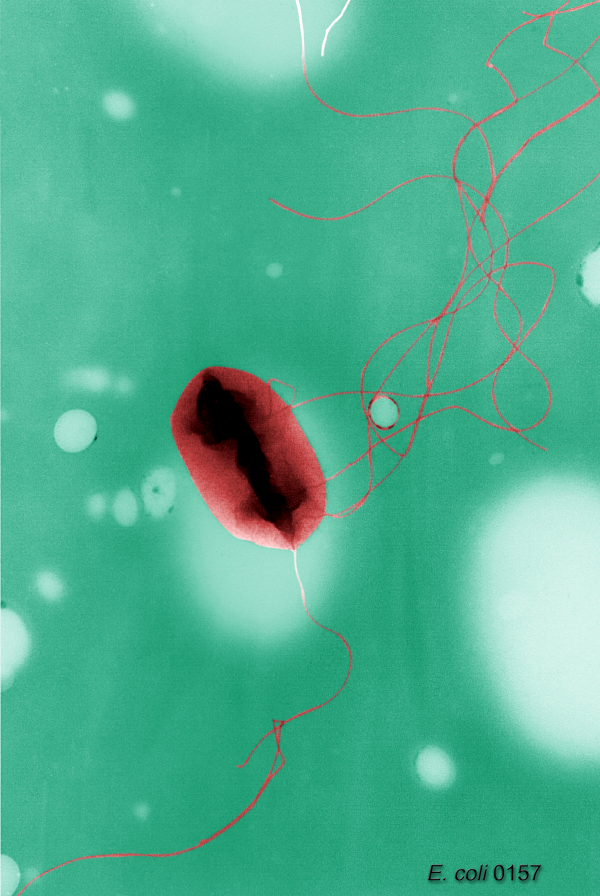
Escherichia coli O127:H6 str. E2348/69

Gram-negativeRodNon-motileFacultative anaerobe

Kingdom

Pseudomonadati

Phylum

Pseudomonadota

Class

Gammaproteobacteria

Order

Enterobacterales

Family

Enterobacteriaceae

Genus

Escherichia

Description

Escherichia coli O127:H6 str. E2348/69 is a gram-negative, rod-shaped bacterium, classified as a facultative anaerobe and a chemoheterotroph, thriving optimally between 25°C and 37°C. This specific strain of E. coli is part of the diverse microbiota found in the gastrointestinal tracts of humans and animals, where it plays a crucial role in digestion and nutrient absorption.As a gram-negative organism, E. coli O127:H6 possesses a thin peptidoglycan layer surrounded by an outer membrane containing lipopolysaccharides, which contributes to its pathogenicity and ability to evade host immune responses. Its rod shape allows for efficient mobility and colonization of various environments, particularly the intestines. As a facultative anaerobe, E. coli can survive and grow in both aerobic and anaerobic conditions, making it versatile in different environments, from the oxygen-rich intestines to anaerobic areas in the gut. Being a chemoheterotroph, E. coli relies on organic compounds for both carbon and energy, metabolizing simple sugars and amino acids to sustain its growth. This metabolic strategy allows it to flourish in the nutrient-rich environments of the gastrointestinal tract, where it contributes to the breakdown of food and synthesis of vitamins. E. coli O127:H6 str. E2348/69 is notable for its pathogenic potential, particularly in the context of foodborne illnesses. It has been associated with outbreaks of diarrhea and more severe conditions like hemolytic uremic syndrome. This strain's virulence factors, such as adhesins and toxins, facilitate its adherence to and colonization of intestinal epithelial cells, underscoring the importance of understanding its behavior in both health and disease contexts.

Taxonomy

KingdomPseudomonadati
PhylumPseudomonadota
ClassGammaproteobacteria
OrderEnterobacterales
FamilyEnterobacteriaceae
GenusEscherichia
SpeciesEscherichia coli
StrainE2348/69

Profile

Physiology
Gram staining propertiesNegative
ShapeRod
MobilityNo
Flagellar presenceYes
Number of membranes2
Image of Escherichia coli O127:H6 str. E2348/69
Image source: Wikipedia/Wikimedia
Ecology, Host, and Life Cycle
Oxygen requirementsFacultative anaerobe
Optimal temperature37
Temperature rangeMesophilic
HabitatHostAssociated
Biotic relationshipFree living
Host(s)Not Available
Cell arrangementPairs - Singles
SporulationNonsporulating
Energy sourceNot Available
PathogenicityNot Available

Genome Summary

Escherichia coli O127:H6 str. E2348/69 plasmid pE2348-2, complete

Gene Summary

Adenine Count

1487 bp

Thymine Count

1417 bp

Guanine Count

1602 bp

Cytosine Count

1641 bp

Genome Length

6147 bp

Protein-coding Genes

8 genes

Non-Coding Genes

0 genes

# of Chromosomes/Plasmids

3

Genes

NameLocus TagUniProt IDStrand OrientationGene Start/EndProtein Molecular Weight
3-deoxy-8-phosphooctulonate synthaseE2348C_RS07120A7ZKY9Positive1377191 - 137804530834.5
type i toxin-antitoxin system toxin ldr family proteinE2348C_RS07125Q6BF87Negative1378194 - 13783013971.95
sodium-potassium/proton antiporter chaaE2348C_RS07130P31801Negative1378706 - 137980639166.9
putative cation transport regulator chabE2348C_RS07135P0AE65Positive1380076 - 13803068935.14
glutathione-specific gamma-glutamylcyclotransferaseE2348C_RS07140P39163Positive1380464 - 138115925529.7
dsre/f sulfur relay family protein ychnE2348C_RS07145P0AB53Negative1381203 - 138155612693.5
inverse autotransporter invasin ychoE2348C_RS07150P39165Positive1381741 - 138313552028.6
two-component system response regulator narlE2348C_RS07155P0AF30Negative1383136 - 138378623901.2
nitrate/nitrite two-component system sensor histidine kinase narxE2348C_RS07160P0AFA3Negative1383779 - 138557567065.9
nitrate transporter narkE2348C_RS07170P10903Positive1385914 - 138730549696.3

Displaying genes 1921 – 1930 of 5139 in total

Metabolites

5136 records
Metabolite IDMetabolite nameStructureCAS number
BASm0000173(R)-3-Hydroxybutyric acidC4H8O3Chemical structure of (R)-3-Hydroxybutyric acid625-72-3
Average104.0473Da
Monoisotopic104.047344122Da
BASm0000217alpha-ribazoleC14H18N2O4Chemical structure of alpha-ribazoleNot available
Average278.3037Da
Monoisotopic278.126657074Da
BASm0000237(R)-4'-phosphopantothenateC9H18NO8PChemical structure of (R)-4'-phosphopantothenateNot available
Average299.2149Da
Monoisotopic299.0770031Da
BASm0000238(R)-3-phenyllactateC9H9O3Chemical structure of (R)-3-phenyllactateNot available
Average165.169Da
Monoisotopic165.05571773Da
BASm00002482,3-dihydroxy-3-methylbutanoateC5H10O4Chemical structure of 2,3-dihydroxy-3-methylbutanoate1756-18-9
Average134.1305Da
Monoisotopic134.0579088Da
BASm00002502,5-didehydro-D-gluconateC6H7O7Chemical structure of 2,5-didehydro-D-gluconate53736-12-2
Average191.1156Da
Monoisotopic191.019177578Da
BASm00002512-dehydropantoateC6H9O4Chemical structure of 2-dehydropantoateNot available
Average145.1333Da
Monoisotopic145.050083776Da
BASm00002532-oxopent-4-enoateC5H5O3Chemical structure of 2-oxopent-4-enoateNot available
Average113.093Da
Monoisotopic113.024417601Da
BASm00002593alpha,12alpha-dihydroxy-7-oxo-5beta-cholanateC24H37O5Chemical structure of 3alpha,12alpha-dihydroxy-7-oxo-5beta-cholanateNot available
Average405.556Da
Monoisotopic405.264647871Da
BASm00002603alpha,7alpha-dihydroxy-12-oxo-5beta-cholanateC24H37O5Chemical structure of 3alpha,7alpha-dihydroxy-12-oxo-5beta-cholanateNot available
Average405.556Da
Monoisotopic405.264647871Da

Displaying 1–10 of 5136 metabolites

Health Effects

No health effects information available for this bacterium.