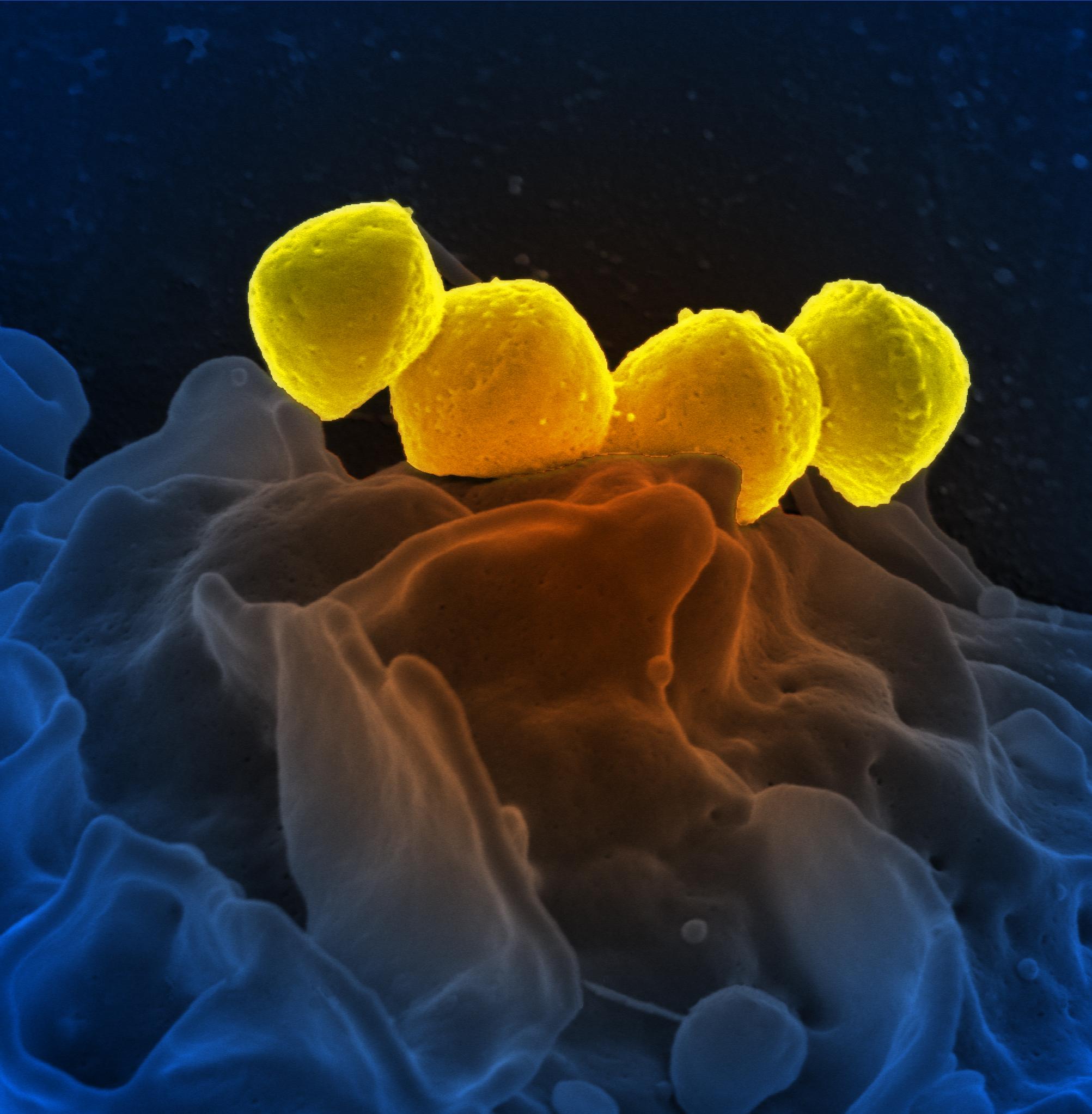
Streptococcus gordonii str. Challis substr. CH1

Gram-positiveCocciNon-motileFacultative anaerobe

Kingdom

Bacillati

Phylum

Bacillota

Class

Bacilli

Order

Lactobacillales

Family

Streptococcaceae

Genus

Streptococcus

Description

Streptococcus gordonii str. Challis substr. CH1 is a Gram-positive, spherical-shaped bacterium that thrives at mesophilic temperatures, is classified as a chemoheterotroph, and is often found in the oral cavity and gastrointestinal tracts of various mammalian species.As a Gram-positive organism, S. gordonii exhibits a thick peptidoglycan layer, which retains the crystal violet stain during the Gram staining process, giving it a purple color under a microscope. This characteristic not only aids in identification but also contributes to its virulence factors and the ability to adhere to surfaces in the host environment. Its coccoid shape allows this microbe to form chains or clusters, a behavior typical of streptococci, which facilitates its pathogenicity by aiding in colonization. S. gordonii is a chemoheterotroph, meaning it relies on organic compounds for both energy and carbon. This metabolic flexibility enables it to thrive in the complex environment of the oral cavity, where it competes with other microorganisms for nutrients. Its mesophilic temperature preference, typically between 30°C and 37°C, aligns well with the human body temperature, making it well-suited for colonization in the mouth and gut. As a facultative anaerobe, S. gordonii can grow in both the presence and absence of oxygen. This adaptability allows it to thrive in various niches within the oral cavity, including periodontal pockets and dental biofilms, contributing to its role in dental plaque formation and oral health issues. Moreover, S. gordonii is recognized for its production of glucosyltransferases that aid in the synthesis of glucans from sucrose, which play a crucial role in biofilm formation. Its presence has been linked to both beneficial and detrimental outcomes in oral health, showing its dual role as a commensal and potential pathogen in conditions such as endocarditis and dental caries.

Taxonomy

KingdomBacillati
PhylumBacillota
ClassBacilli
OrderLactobacillales
FamilyStreptococcaceae
GenusStreptococcus
SpeciesStreptococcus gordonii
StrainChallis

Profile

Physiology
Gram staining propertiesPositive
ShapeCocci
MobilityNo
Flagellar presenceYes
Number of membranes1
Image of Streptococcus gordonii str. Challis substr. CH1
Image source: Wikipedia/Wikimedia
Ecology, Host, and Life Cycle
Oxygen requirementsFacultative anaerobe
Optimal temperature37
Temperature rangeMesophilic
HabitatHostAssociated
Biotic relationshipFree living
Host(s)Not Available
Cell arrangementChains - Pairs
SporulationNonsporulating
Energy sourceNot Available
PathogenicityYes

Genome Summary

Streptococcus gordonii str. Challis substr. CH1, complete

Gene Summary

Adenine Count

655466 bp

Thymine Count

651399 bp

Guanine Count

447251 bp

Cytosine Count

442546 bp

Genome Length

2196662 bp

Protein-coding Genes

2053 genes

Non-Coding Genes

74 genes

# of Chromosomes/Plasmids

1

Genes

NameLocus TagUniProt IDStrand OrientationGene Start/EndProtein Molecular Weight
preprotein translocase subunit secySGO_RS09620A8AZK5Negative2027366 - 202867647346.9
50s ribosomal protein l15SGO_RS09625A8AZK6Negative2028689 - 202912915415.7
50s ribosomal protein l30SGO_RS09630A8AZK7Negative2029285 - 20294676425.07
30s ribosomal protein s5SGO_RS09635A8AZK8Negative2029481 - 202997517090.9
50s ribosomal protein l18SGO_RS09640A8AZK9Negative2029994 - 203035012880.6
50s ribosomal protein l6SGO_RS09645A8AZL0Negative2030433 - 203096919483.7
30s ribosomal protein s8SGO_RS09650A8AZL1Negative2031158 - 203155614763.1
type z 30s ribosomal protein s14SGO_RS09655A8AZL2Negative2031841 - 20320267085.83
50s ribosomal protein l5SGO_RS09660A8AZL3Negative2032044 - 203258619860.2
50s ribosomal protein l24SGO_RS09665A8AZL4Negative2032610 - 203291511010.5

Displaying genes 1941 – 1950 of 2127 in total

Metabolites

1788 records
Metabolite IDMetabolite nameStructureCAS number
BASm0000237(R)-4'-phosphopantothenateC9H18NO8PChemical structure of (R)-4'-phosphopantothenateNot available
Average299.2149Da
Monoisotopic299.0770031Da
BASm00002502,5-didehydro-D-gluconateC6H7O7Chemical structure of 2,5-didehydro-D-gluconate53736-12-2
Average191.1156Da
Monoisotopic191.019177578Da
BASm00002512-dehydropantoateC6H9O4Chemical structure of 2-dehydropantoateNot available
Average145.1333Da
Monoisotopic145.050083776Da
BASm00002532-oxopent-4-enoateC5H5O3Chemical structure of 2-oxopent-4-enoateNot available
Average113.093Da
Monoisotopic113.024417601Da
BASm00002603alpha,7alpha-dihydroxy-12-oxo-5beta-cholanateC24H37O5Chemical structure of 3alpha,7alpha-dihydroxy-12-oxo-5beta-cholanateNot available
Average405.556Da
Monoisotopic405.264647871Da
BASm0000377(S)-malateC4H4O5Chemical structure of (S)-malateNot available
Average132.0716Da
Monoisotopic132.005873238Da
BASm0000387(6R)-5,10-methylene-5,6,7,8-tetrahydrofolateC20H21N7O6Chemical structure of (6R)-5,10-methylene-5,6,7,8-tetrahydrofolateNot available
Average455.432Da
Monoisotopic455.1564286Da
BASm0000403(S)-acetoinC4H8O2Chemical structure of (S)-acetoinNot available
Average88.1051Da
Monoisotopic88.0524295Da
BASm0000542HgHgChemical structure of HgNot available
Average200.59Da
Monoisotopic201.9706256Da
BASm0000592(S)-1-phenylethanolC8H10OChemical structure of (S)-1-phenylethanolNot available
Average122.1644Da
Monoisotopic122.0731649Da

Displaying 1–10 of 1788 metabolites

Health Effects

No health effects information available for this bacterium.