
Kingdom
Pseudomonadati
Phylum
Pseudomonadota
Class
Betaproteobacteria
Order
Burkholderiales
Family
Burkholderiaceae
Genus
Mycetohabitans
Description
Taxonomy
| Kingdom | Pseudomonadati |
|---|---|
| Phylum | Pseudomonadota |
| Class | Betaproteobacteria |
| Order | Burkholderiales |
| Family | Burkholderiaceae |
| Genus | Mycetohabitans |
| Species | Mycetohabitans endofungorum |
| Strain | HKI456 |
Profile
| Physiology | |
|---|---|
| Gram staining properties | Gram-negative |
| Shape | ovoid |
| Mobility | Not Available |
| Flagellar presence | Yes |
| Number of membranes | Not Available |
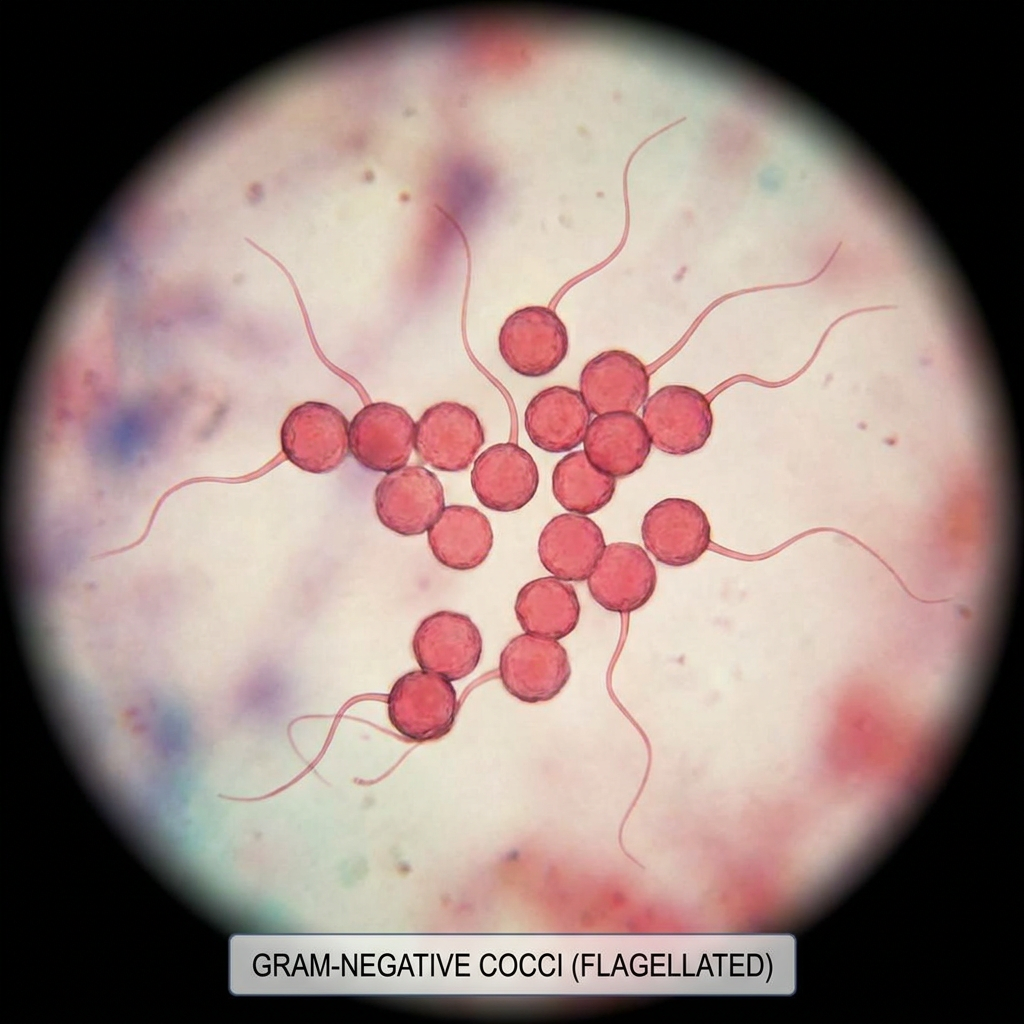
AI-generated image based on bacteria physiology
| Ecology, Host, and Life Cycle | |
|---|---|
| Oxygen requirements | aerobic |
| Optimal temperature | 32 |
| Temperature range | mesophilic |
| Habitat | Not Available |
| Biotic relationship | Not Available |
| Host(s) | Rhizopus microsporus, Fungi |
| Cell arrangement | Not Available |
| Sporulation | Not Available |
| Energy source | Not Available |
| Pathogenicity | Not Available |
Gene Summary
Adenine Count
634361 bp
Thymine Count
639272 bp
Guanine Count
1016413 bp
Cytosine Count
998362 bp
Genome Length
3288408 bp
Protein-coding Genes
2921 genes
Non-Coding Genes
126 genes
# of Chromosomes/Plasmids
1
Genes
| Name | Locus Tag | UniProt ID | Strand Orientation | Gene Start/End | Protein Molecular Weight |
|---|---|---|---|---|---|
| phenylpropionate dioxygenase-like ring-hydroxylating dioxygenase large terminal subunit | B0O95_11277 | Not Available | Positive | 2586301 - 2587377 | 41141.2 |
| diaminobutyrate aminotransferase | B0O95_11278 | Not Available | Positive | 2587370 - 2588776 | 49968.4 |
| l-ornithine n5-oxygenase | B0O95_11279 | Not Available | Positive | 2588773 - 2590212 | 52454.3 |
| paib family negative transcriptional regulator | B0O95_11280 | Not Available | Positive | 2590172 - 2590819 | 24335.9 |
| cell division protein zape | B0O95_11281 | Not Available | Positive | 2590809 - 2591879 | 39635.6 |
| phenylpyruvate tautomerase ppta (4-oxalocrotonate tautomerase family) | B0O95_11282 | Not Available | Positive | 2591882 - 2592271 | 14691.6 |
| hypothetical protein | B0O95_11283 | Not Available | Negative | 2592951 - 2593259 | 10829.2 |
| hypothetical protein | B0O95_11284 | Not Available | Positive | 2593590 - 2593877 | 10497.6 |
| hypothetical protein | B0O95_11285 | Not Available | Negative | 2594220 - 2595164 | 32693.0 |
| hypothetical protein | B0O95_11286 | Not Available | Positive | 2595249 - 2595665 | 14696.0 |
Pathways
0 pathways
No pathways found
No metabolic pathways have been associated with this bacterium yet.
Health Effects
No health effects information available for this bacterium.