Kingdom
Pseudomonadati
Phylum
Pseudomonadota
Class
Betaproteobacteria
Order
Neisseriales
Family
Chromobacteriaceae
Genus
Chromobacterium
Description
Taxonomy
| Kingdom | Pseudomonadati |
|---|---|
| Phylum | Pseudomonadota |
| Class | Betaproteobacteria |
| Order | Neisseriales |
| Family | Chromobacteriaceae |
| Genus | Chromobacterium |
| Species | Chromobacterium haemolyticum |
| Strain | No strain |
Profile
| Physiology | |
|---|---|
| Gram staining properties | Gram-negative |
| Shape | rod |
| Mobility | Not Available |
| Flagellar presence | Yes |
| Number of membranes | Not Available |

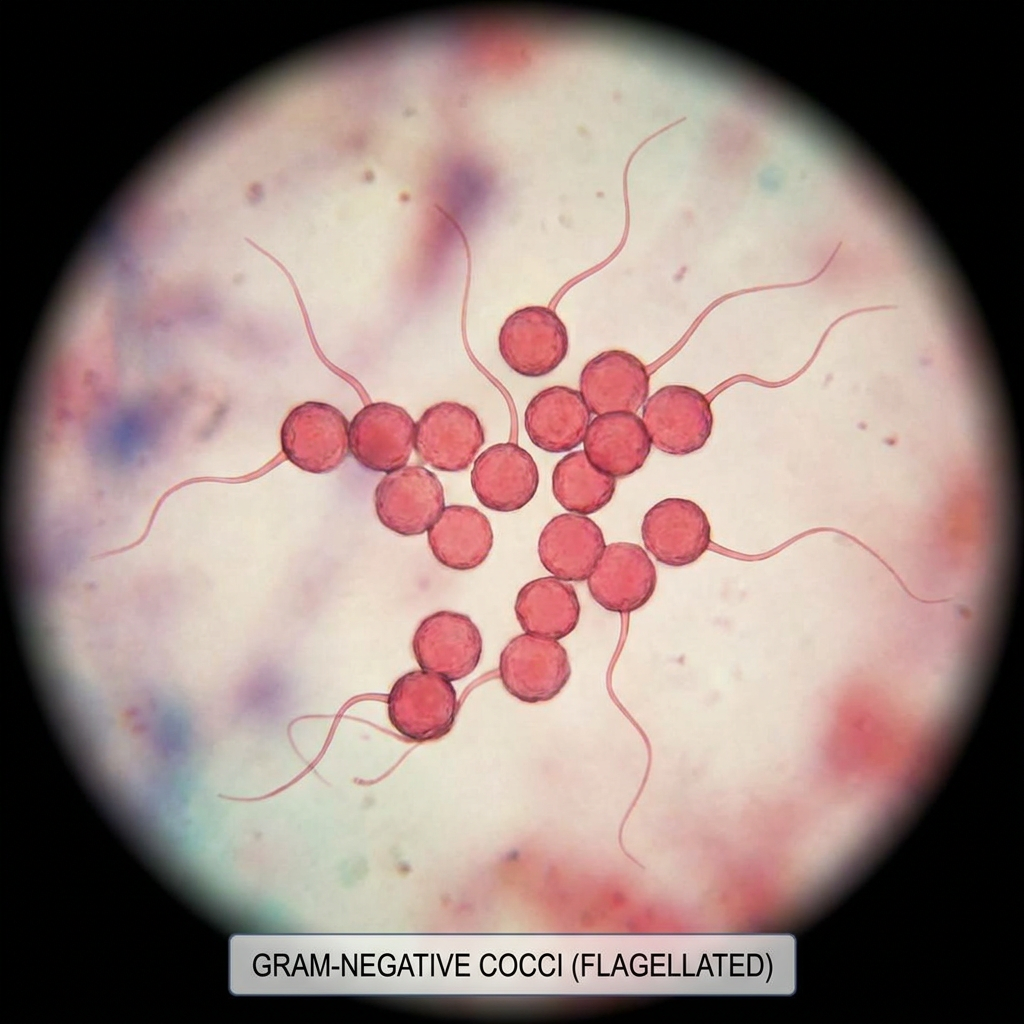
AI-generated image based on bacteria physiology
| Ecology, Host, and Life Cycle | |
|---|---|
| Oxygen requirements | aerobic |
| Optimal temperature | Not Available |
| Temperature range | Not Available |
| Habitat | canal |
| Biotic relationship | Not Available |
| Host(s) | Homo sapiens |
| Cell arrangement | Not Available |
| Sporulation | Not Available |
| Energy source | Not Available |
| Pathogenicity | Not Available |
Genome Summary
Chromobacterium haemolyticum strain H5244 84, whole genome shotgun
Gene Summary
Adenine Count
937250 bp
Thymine Count
943270 bp
Guanine Count
1561676 bp
Cytosine Count
1543598 bp
Genome Length
4985794 bp
Protein-coding Genes
0 genes
Non-Coding Genes
0 genes
# of Chromosomes/Plasmids
2
Genes
| Name | Locus Tag | UniProt ID | Strand Orientation | Gene Start/End | Protein Molecular Weight |
|---|---|---|---|---|---|
| hypothetical protein | B0T39_06170 | Not Available | Negative | 1350550 - 1350918 | 13176.9 |
| aminotransferase | B0T39_06175 | Not Available | Positive | 1351167 - 1352399 | 45228.7 |
| homoserine dehydrogenase | B0T39_06180 | Not Available | Positive | 1352607 - 1353917 | 46389.4 |
| hypothetical protein | B0T39_06185 | Not Available | Positive | 1353910 - 1354242 | 11722.1 |
| threonine synthase | B0T39_06190 | Not Available | Positive | 1354242 - 1355651 | 51439.3 |
| hypothetical protein | B0T39_06195 | Not Available | Negative | 1355708 - 1357741 | 70031.2 |
| flagella basal body p-ring formation protein flga | B0T39_06200 | Not Available | Positive | 1357896 - 1358573 | 23763.0 |
| flagellar biosynthesis anti-sigma factor flgm | B0T39_06205 | Not Available | Positive | 1358704 - 1359000 | 9778.38 |
| hypothetical protein | B0T39_06210 | Not Available | Positive | 1359024 - 1359488 | 16708.9 |
| threonine-phosphate decarboxylase | B0T39_06215 | Not Available | Positive | 1359708 - 1360628 | 33855.1 |
Pathways
0 pathways
No pathways found
No metabolic pathways have been associated with this bacterium yet.
Health Effects
| Health Condition | Relation | Reference |
|---|---|---|
| Infections | Causes | PMC10149000 |
| Pneumonia | Causes | PMC10149000 |
| Bacteremia | Causes | PMC10149000 |
| Necrotizing fasciitis | Causes | PMC10149000 |
| Pediatric proctitis | Causes | PMC10149000 |
| Necrotizing fasciitis | Causes | PMC10288766 |
| Bacteremia | Causes | PMC10288766 |
| Pneumonia | Causes | PMC10288766 |
| Proctocolitis | Causes | PMC10288766 |
| Pediatric bacteremia | Causes | PMC10288766 |