
Kingdom
Pseudomonadati
Phylum
Pseudomonadota
Class
Gammaproteobacteria
Order
Pseudomonadales
Family
Pseudomonadaceae
Genus
Pseudomonas
Description
Taxonomy
| Kingdom | Pseudomonadati |
|---|---|
| Phylum | Pseudomonadota |
| Class | Gammaproteobacteria |
| Order | Pseudomonadales |
| Family | Pseudomonadaceae |
| Genus | Pseudomonas |
| Species | Pseudomonas savastanoi |
| Strain | pv. nerii |
Profile
| Physiology | |
|---|---|
| Gram staining properties | Negative |
| Shape | Rod |
| Mobility | Yes |
| Flagellar presence | Yes |
| Number of membranes | 2 |
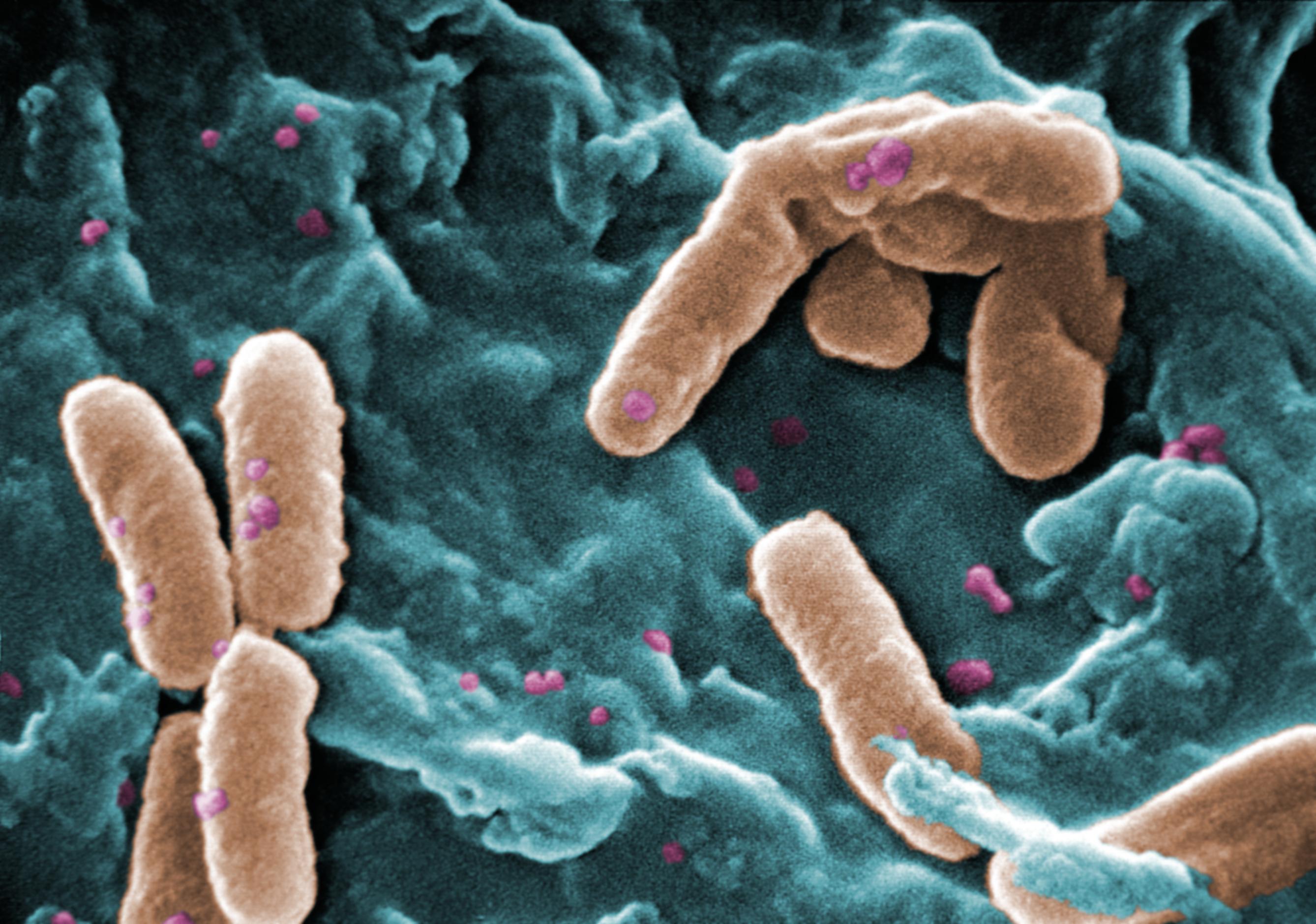
Image source: Wikipedia/Wikimedia
| Ecology, Host, and Life Cycle | |
|---|---|
| Oxygen requirements | Aerobe |
| Optimal temperature | 28 |
| Temperature range | Mesophilic |
| Habitat | Multiple |
| Biotic relationship | Free living |
| Host(s) | Nerium oleander |
| Cell arrangement | Singles |
| Sporulation | Not Available |
| Energy source | Heterotroph |
| Pathogenicity | Not Available |
Gene Summary
Adenine Count
1209283 bp
Thymine Count
1219036 bp
Guanine Count
1693618 bp
Cytosine Count
1677464 bp
Genome Length
5829603 bp
Protein-coding Genes
5304 genes
Non-Coding Genes
79 genes
# of Chromosomes/Plasmids
1
Genes
| Name | Locus Tag | UniProt ID | Strand Orientation | Gene Start/End | Protein Molecular Weight |
|---|---|---|---|---|---|
| major facilitator family transporter | ALP28_01482 | Not Available | Negative | 1136509 - 1137795 | 46573.6 |
| transcriptional regulator, gntr family | ALP28_01483 | Not Available | Negative | 1137846 - 1138577 | 27464.0 |
| major facilitator family transporter | ALP28_01484 | Not Available | Positive | 1138832 - 1140028 | 41943.3 |
| hypothetical protein | ALP28_01485 | Not Available | Positive | 1140256 - 1141002 | 27554.6 |
| phospholipase/carboxylesterase protein | ALP28_01486 | Not Available | Negative | 1141054 - 1141806 | 27245.5 |
| proteinral secretion pathway protein d | ALP28_04729 | Not Available | Negative | 1141849 - 1144317 | 87345.0 |
| putative proteinral secretion pathway protein gspm | ALP28_01488 | Not Available | Negative | 1144703 - 1145314 | 22307.7 |
| proteinral secretion pathway protein l | ALP28_101670 | Not Available | Negative | 1145289 - 1146440 | 42332.8 |
| proteinral secretion pathway protein k | ALP28_01489 | Not Available | Negative | 1146383 - 1147117 | 26436.2 |
| putative proteinral secretion pathway protein j | ALP28_01490 | Not Available | Negative | 1147114 - 1147746 | 22322.0 |
Pathways
0 pathways
No pathways found
No metabolic pathways have been associated with this bacterium yet.


