Kingdom
Pseudomonadati
Phylum
Pseudomonadota
Class
Gammaproteobacteria
Order
Enterobacterales
Family
Yersiniaceae
Genus
Yersinia
Description
Taxonomy
| Kingdom | Pseudomonadati |
|---|---|
| Phylum | Pseudomonadota |
| Class | Gammaproteobacteria |
| Order | Enterobacterales |
| Family | Yersiniaceae |
| Genus | Yersinia |
| Species | Yersinia pseudotuberculosis |
| Strain | IP 32953 |
Profile
| Physiology | |
|---|---|
| Gram staining properties | Negative |
| Shape | Rod |
| Mobility | Yes |
| Flagellar presence | Yes |
| Number of membranes | 2 |

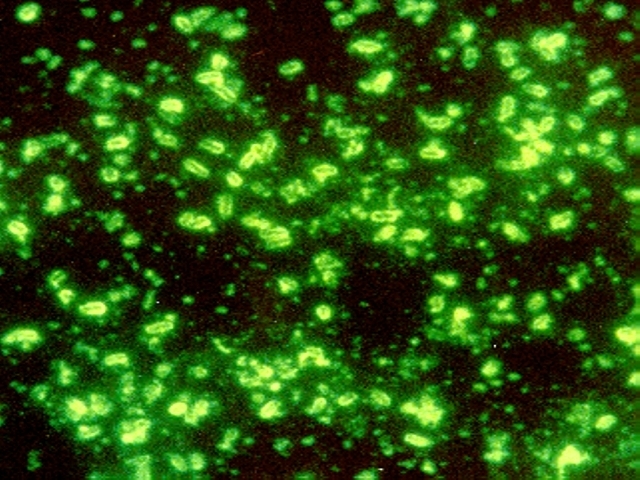
Image source: Wikipedia/Wikimedia
| Ecology, Host, and Life Cycle | |
|---|---|
| Oxygen requirements | Facultative anaerobe |
| Optimal temperature | 28 |
| Temperature range | Mesophilic |
| Habitat | Multiple |
| Biotic relationship | Free living |
| Host(s) | Not Available |
| Cell arrangement | Singles |
| Sporulation | Nonsporulating |
| Energy source | Heterotroph |
| Pathogenicity | Yes |
Genome Summary
Yersinia pseudotuberculosis IP 32953, complete sequence.
Gene Summary
Adenine Count
Not Available
Thymine Count
Not Available
Guanine Count
Not Available
Cytosine Count
Not Available
Genome Length
Not Available
Protein-coding Genes
Not Available
Non-Coding Genes
Not Available
# of Chromosomes/Plasmids
2
Genes
| Name | Locus Tag | UniProt ID | Strand Orientation | Gene Start/End | Protein Molecular Weight |
|---|---|---|---|---|---|
| acetolactate synthase 3 large subunit | YPTB_RS03785 | P00893 | Positive | 810018 - 811745 | 62734.9 |
| acetolactate synthase small subunit | YPTB_RS03790 | P21622 | Positive | 811748 - 812242 | 18126.1 |
| catabolite repressor/activator | YPTB_RS03800 | P0ACP3 | Positive | 812710 - 813720 | 38156.9 |
| l-alanine exporter alae | YPTB_RS03805 | Q0WJC2 | Negative | 813851 - 814291 | 16514.3 |
| is6 family transposase | YPTB_RS23695 | Not Available | Positive | 814749 - 814817 | 2595.14 |
| division/cell wall cluster transcriptional repressor mraz | YPTB_RS03810 | A7FM75 | Positive | 815393 - 815851 | 17473.0 |
| 16s rrna (cytosine(1402)-n(4))-methyltransferase rsmh | YPTB_RS03815 | A7FM74 | Positive | 815854 - 816816 | 35592.6 |
| cell division protein ftsl | YPTB_RS03820 | Q7CGA7 | Positive | 816813 - 817130 | 11730.5 |
| peptidoglycan glycosyltransferase ftsi | YPTB_RS03825 | P0AD69 | Positive | 817196 - 818959 | 63662.2 |
| udp-n-acetylmuramoyl-l-alanyl-d-glutamate--2, 6-diaminopimelate ligase | YPTB_RS03830 | Q8ZIF4 | Positive | 818946 - 820433 | 52818.0 |
Health Effects
No health effects information available for this bacterium.