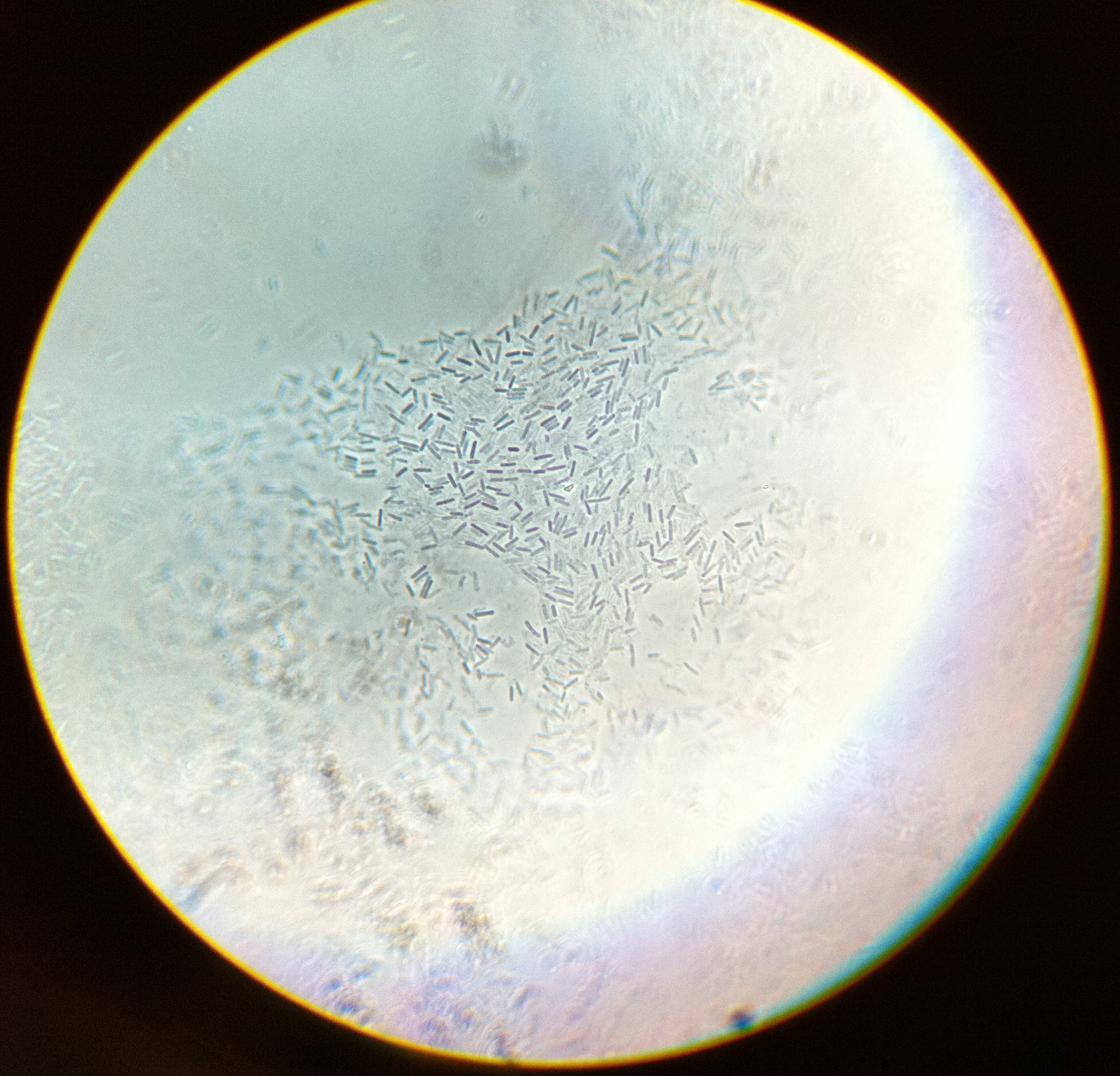
Clostridium acetobutylicum ATCC 824

Gram-positiveRodMotileAnaerobe

Kingdom

Bacillati

Phylum

Bacillota

Class

Clostridia

Order

Eubacteriales

Family

Clostridiaceae

Genus

Clostridium

Description

Clostridium acetobutylicum ATCC 824 is a gram-positive, rod-shaped bacterium that thrives in a thermophilic environment, falling under the category of " Mesophilic" temperature preference. As a chemoheterotroph, it relies on organic compounds as its energy source, where it uses fermentation as its mode of energy production. This means that C. acetobutylicum ATCC 824 does not require light for energy, and instead, breaks down organic molecules to produce ATP. The bacterium's gram-positive staining characteristics indicate the presence of a thick peptidoglycan cell wall, which provides structural support and protection against external environmental factors. Its rod-shaped morphology allows it to adapt to various environments and interact with its surroundings effectively. C. acetobutylicum ATCC 824 is an obligate anaerobe, meaning that it cannot thrive in the presence of oxygen and is susceptible to damage or even death from exposure to atmospheric oxygen. This adaptation enables it to survive in environments where oxygen levels are low or absent, such as soil, sediments, and the human gastrointestinal tract. In terms of body sites, C. acetobutylicum ATCC 824 can be found in various parts of the human body, including the gut, skin, and reproductive tract. It is also commonly isolated from soil, sewage, and industrial environments. One of the most notable features of C. acetobutylicum ATCC 824 is its ability to produce a wide range of bioactive compounds, including acetone, butanol, and ethanol, which are produced during fermentation. This microbe has been extensively studied in the context of industrial biofuel production, biotechnology, and bioremediation. Furthermore, C. acetobutylicum ATCC 824 has been found to possess genes involved in the biosynthesis of antimicrobial compounds, such as antimicrobial peptides and bacteriocins. These compounds have been shown to exhibit potent antimicrobial activity against other microorganisms, making this microbe a valuable subject for further research into antimicrobial resistance and the development of novel antibiotics.

Taxonomy

KingdomBacillati
PhylumBacillota
ClassClostridia
OrderEubacteriales
FamilyClostridiaceae
GenusClostridium
SpeciesClostridium acetobutylicum
StrainATCC 824

Profile

Physiology
Gram staining propertiesPositive
ShapeRod
MobilityYes
Flagellar presenceYes
Number of membranes1
Image of Clostridium acetobutylicum ATCC 824
Image source: Wikipedia/Wikimedia
Ecology, Host, and Life Cycle
Oxygen requirementsAnaerobe
Optimal temperature10
Temperature rangeMesophilic
HabitatMultiple
Biotic relationshipFree living
Host(s)Not Available
Cell arrangementPairs - Singles
SporulationSporulating
Energy sourceChemoorganotroph
PathogenicityNo

Genome Summary

Clostridium acetobutylicum ATCC 824 plasmid pSOL1, complete

Gene Summary

Adenine Count

65546 bp

Thymine Count

67104 bp

Guanine Count

29118 bp

Cytosine Count

30232 bp

Genome Length

192000 bp

Protein-coding Genes

176 genes

Non-Coding Genes

0 genes

# of Chromosomes/Plasmids

2

Genes

NameLocus TagUniProt IDStrand OrientationGene Start/EndProtein Molecular Weight
hypothetical proteinCA_RS19530Not AvailableNegative62845 - 6331817638.8
nramp family divalent metal transporterCA_RS19535Not AvailablePositive63631 - 6492647028.6
fructose bisphosphate aldolaseCA_RS19540Not AvailableNegative65300 - 6618733507.1
m6 family metalloprotease domain-containing proteinCA_RS19545Not AvailablePositive66595 - 6866776037.8
mannose/fructose/sorbose pts transporter subunit iiaCA_RS19550Not AvailablePositive69541 - 7051835306.4
pts mannose/fructose/sorbose transporter subunit iicCA_RS19555Not AvailablePositive70552 - 7135827410.8
pts system mannose/fructose/sorbose family transporter subunit iidCA_RS19560Not AvailablePositive71378 - 7228933431.4
duf956 family proteinCA_RS19565Not AvailablePositive72576 - 7295014484.7
cof-type had-iib family hydrolaseCA_RS19570Not AvailableNegative73055 - 7390631939.6
ricin domain-containing proteinCA_RS19575Not AvailableNegative74067 - 7543749679.2

Displaying genes 61 – 70 of 3992 in total

Metabolites

482 records
Metabolite IDMetabolite nameStructureCAS number
BASm0000217alpha-ribazoleC14H18N2O4Chemical structure of alpha-ribazoleNot available
Average278.3037Da
Monoisotopic278.126657074Da
BASm0000237(R)-4'-phosphopantothenateC9H18NO8PChemical structure of (R)-4'-phosphopantothenateNot available
Average299.2149Da
Monoisotopic299.0770031Da
BASm00002512-dehydropantoateC6H9O4Chemical structure of 2-dehydropantoateNot available
Average145.1333Da
Monoisotopic145.050083776Da
BASm0000274aldehydo-D-galacturonateC6H9O7Chemical structure of aldehydo-D-galacturonateNot available
Average193.132Da
Monoisotopic193.0353762Da
BASm0000377(S)-malateC4H4O5Chemical structure of (S)-malateNot available
Average132.0716Da
Monoisotopic132.005873238Da
BASm0000387(6R)-5,10-methylene-5,6,7,8-tetrahydrofolateC20H21N7O6Chemical structure of (6R)-5,10-methylene-5,6,7,8-tetrahydrofolateNot available
Average455.432Da
Monoisotopic455.1564286Da
BASm0000989GlycerolC3H8O3Chemical structure of Glycerol56-81-5
Average92.0938Da
Monoisotopic92.04734412Da
BASm0001111keto-D-tagaturonateC6H9O7Chemical structure of keto-D-tagaturonateNot available
Average193.132Da
Monoisotopic193.0353762Da
BASm0001142butanoateC4H7O2Chemical structure of butanoateNot available
Average87.099Da
Monoisotopic87.045153045Da
BASm0001167triphosphateO10P3Chemical structure of triphosphate14127-68-5
Average252.9153Da
Monoisotopic252.8704308Da

Displaying 1–10 of 482 metabolites

Health Effects

No health effects information available for this bacterium.