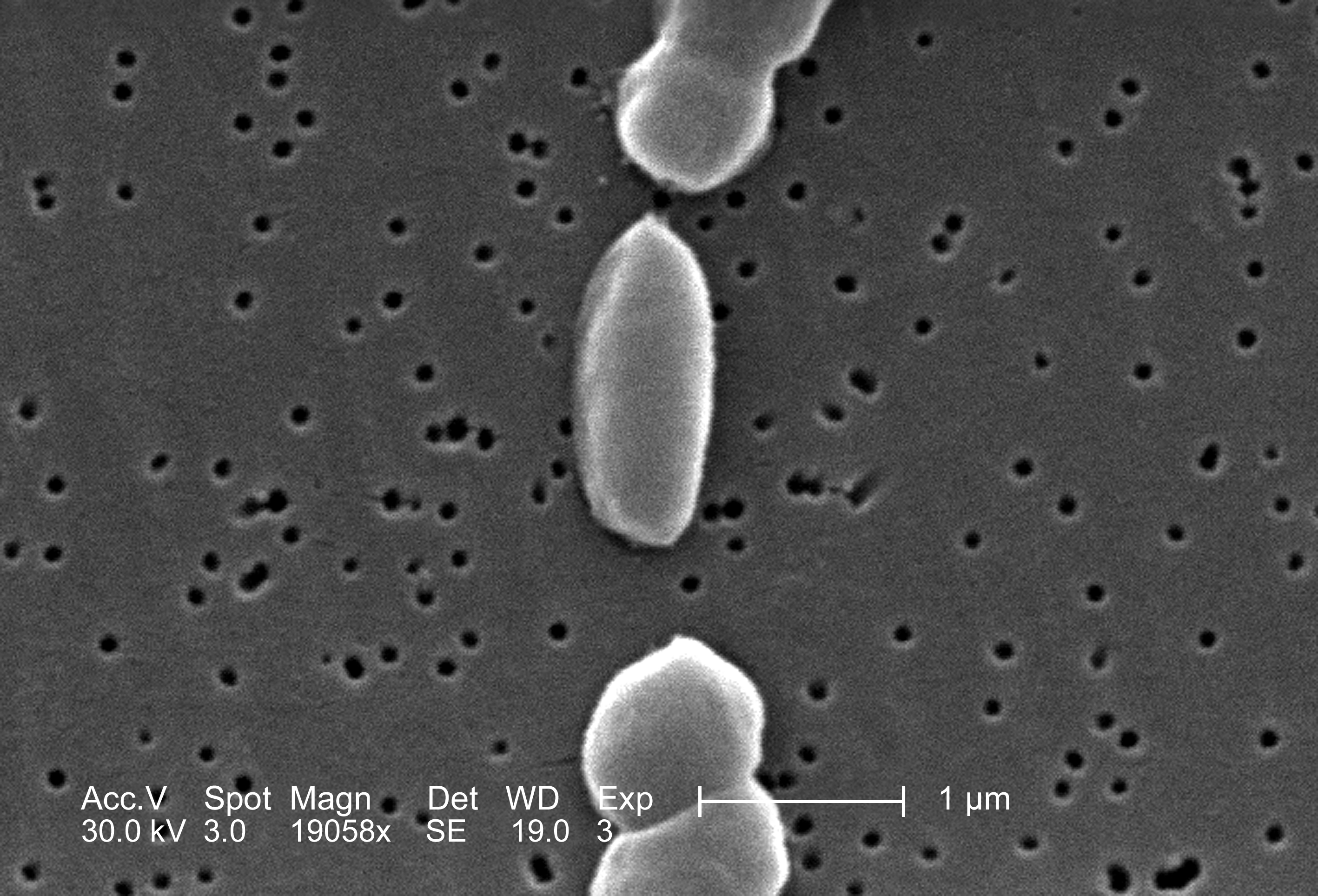
Vibrio parahaemolyticus RIMD 2210633

Gram-negativeRodMotileFacultative anaerobe

Kingdom

Pseudomonadati

Phylum

Pseudomonadota

Class

Gammaproteobacteria

Order

Vibrionales

Family

Vibrionaceae

Genus

Vibrio

Description

Vibrio parahaemolyticus RIMD 2210633 is a gram-negative, rod-shaped bacterium that thrives in warm coastal environments, classified as a mesophile due to its optimum growth temperature range of 20-37°C. As a chemotroph, it derives energy from chemical compounds, specifically organic matter, rather than through photosynthesis. This bacterium is typically found in marine and estuarine environments, particularly in brackish waters, and is associated with various body sites in humans, predominantly the gastrointestinal tract, where it can lead to foodborne illness. Being a facultative anaerobe, V. parahaemolyticus can grow in both the presence and absence of oxygen, which grants it versatility in fluctuating environmental conditions. This adaptability allows the bacterium to survive in anaerobic niches within aquatic ecosystems. The presence of this microbe in coastal waters often correlates with warmer temperatures and higher salinity levels, typically increasing in abundance during the summer months.Vibrio parahaemolyticus RIMD 2210633 is particularly well-known for its role in seafood-related gastroenteritis, with infections often linked to the consumption of raw or undercooked shellfish. The bacterium can produce several virulence factors, including hemolysins and other enzymes that contribute to its pathogenicity. Additionally, it possesses a unique evolutionary history, having undergone horizontal gene transfer, which has diversified its genomic repertoire and enhanced its survival strategies in differing environments. This microbial versatility makes Vibrio parahaemolyticus a fascinating subject of study in food safety and environmental microbiology.

Taxonomy

KingdomPseudomonadati
PhylumPseudomonadota
ClassGammaproteobacteria
OrderVibrionales
FamilyVibrionaceae
GenusVibrio
SpeciesVibrio parahaemolyticus
StrainRIMD 2210633

Profile

Physiology
Gram staining propertiesNegative
ShapeRod
MobilityYes
Flagellar presenceYes
Number of membranes2
Image of Vibrio parahaemolyticus RIMD 2210633
Image source: Wikipedia/Wikimedia
Ecology, Host, and Life Cycle
Oxygen requirementsFacultative anaerobe
Optimal temperature20
Temperature rangeMesophilic
HabitatAquatic
Biotic relationshipFree living
Host(s)Homo sapiens
Cell arrangementSingles
SporulationNonsporulating
Energy sourceHeterotroph
PathogenicityYes

Genome Summary

Vibrio parahaemolyticus RIMD 2210633 chromosome 1, complete

Gene Summary

Adenine Count

893352 bp

Thymine Count

902673 bp

Guanine Count

745919 bp

Cytosine Count

746614 bp

Genome Length

3288558 bp

Protein-coding Genes

2887 genes

Non-Coding Genes

154 genes

# of Chromosomes/Plasmids

2

Genes

NameLocus TagUniProt IDStrand OrientationGene Start/EndProtein Molecular Weight
marr family transcriptional regulator cosrVP_RS09260Not AvailablePositive1991617 - 199209318182.0
response regulator transcription factorVP_RS09265Q1M7A0Negative1992131 - 199276923716.9
cache domain-containing proteinVP_RS09270Q1M799Negative1992753 - 199411751121.7
trap transporter large permease subunitVP_RS09275Q9HU16Negative1994232 - 199551845805.1
trap transporter small permease subunitVP_RS09280Not AvailableNegative1995531 - 199607020281.1
trap transporter substrate-binding proteinVP_RS09285Q8YSQ6Negative1996196 - 199728441021.2
hypothetical proteinVP_RS09290Not AvailableNegative1997772 - 199816113638.0
duf2982 domain-containing proteinVP_RS09295Not AvailablePositive1998432 - 199909725383.0
mbl fold metallo-hydrolaseVP_RS09300P75849Negative1999118 - 199977423841.4
duf882 domain-containing proteinVP_RS09305P0AB08Negative1999871 - 200041920183.2

Displaying genes 1831 – 1840 of 4709 in total

Metabolites

2328 records
Metabolite IDMetabolite nameStructureCAS number
BASm0000217alpha-ribazoleC14H18N2O4Chemical structure of alpha-ribazoleNot available
Average278.3037Da
Monoisotopic278.126657074Da
BASm0000237(R)-4'-phosphopantothenateC9H18NO8PChemical structure of (R)-4'-phosphopantothenateNot available
Average299.2149Da
Monoisotopic299.0770031Da
BASm00002502,5-didehydro-D-gluconateC6H7O7Chemical structure of 2,5-didehydro-D-gluconate53736-12-2
Average191.1156Da
Monoisotopic191.019177578Da
BASm00002512-dehydropantoateC6H9O4Chemical structure of 2-dehydropantoateNot available
Average145.1333Da
Monoisotopic145.050083776Da
BASm00002532-oxopent-4-enoateC5H5O3Chemical structure of 2-oxopent-4-enoateNot available
Average113.093Da
Monoisotopic113.024417601Da
BASm00002603alpha,7alpha-dihydroxy-12-oxo-5beta-cholanateC24H37O5Chemical structure of 3alpha,7alpha-dihydroxy-12-oxo-5beta-cholanateNot available
Average405.556Da
Monoisotopic405.264647871Da
BASm0000274aldehydo-D-galacturonateC6H9O7Chemical structure of aldehydo-D-galacturonateNot available
Average193.132Da
Monoisotopic193.0353762Da
BASm0000305tetrathionateO6S4Chemical structure of tetrathionateNot available
Average224.24Da
Monoisotopic223.8588696Da
BASm0000377(S)-malateC4H4O5Chemical structure of (S)-malateNot available
Average132.0716Da
Monoisotopic132.005873238Da
BASm0000387(6R)-5,10-methylene-5,6,7,8-tetrahydrofolateC20H21N7O6Chemical structure of (6R)-5,10-methylene-5,6,7,8-tetrahydrofolateNot available
Average455.432Da
Monoisotopic455.1564286Da

Displaying 1–10 of 2328 metabolites

Health Effects

No health effects information available for this bacterium.