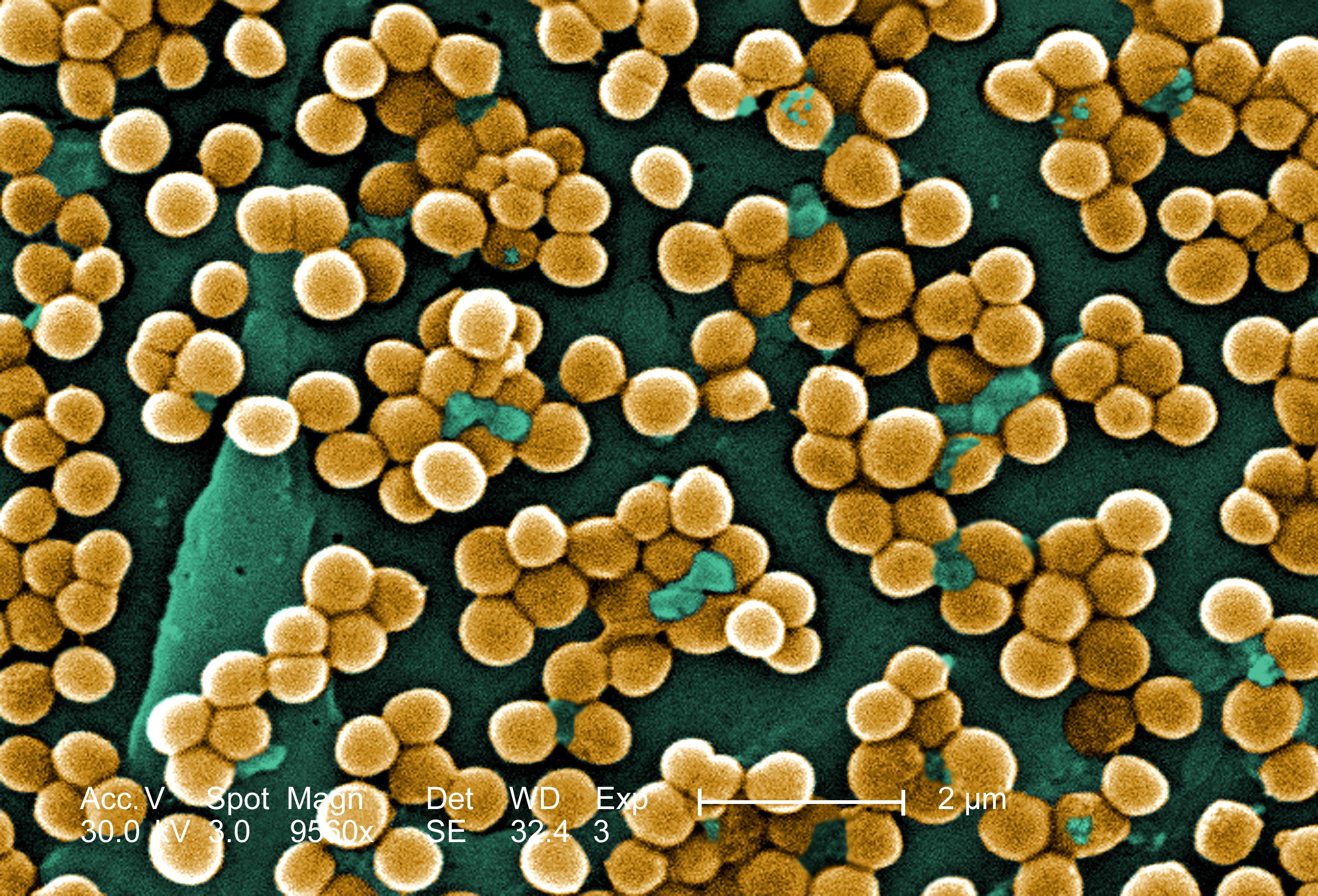
Staphylococcus aureus subsp. aureus MW2

Gram-positiveCocciNon-motileFacultative anaerobe

Kingdom

Bacillati

Phylum

Bacillota

Class

Bacilli

Order

Caryophanales

Family

Staphylococcaceae

Genus

Staphylococcus

Description

Staphylococcus aureus subsp. aureus MW2 is a gram-positive cocci bacterium that exhibits a staphylococcal arrangement, thrives optimally at temperatures around 37°C, is classified as a chemoheterotroph, and is a facultative anaerobe. This versatile microbe typically colonizes human skin and mucosal surfaces, including the nose, throat, and genitourinary tract, while also being associated with various infections in multiple body sites such as wounds, the bloodstream, respiratory tract, and bones. As a gram-positive organism, S. aureus MW2 retains crystal violet during the Gram staining process, resulting in a purple coloration indicative of its thick peptidoglycan cell wall. Its cocci shape allows for its characteristic formation into clusters, resembling bunches of grapes, which is a hallmark of staphylococci. The optimal growth temperature aligns with the human body temperature, facilitating its survival and proliferation within the host. Being a chemoheterotroph, S. aureus MW2 relies on organic compounds for both energy and carbon, which it derives from various substrates in its environment. This metabolic flexibility enables it to thrive in diverse environments, whether on skin or in other nutrient-rich niches. As a facultative anaerobe, it can grow in the presence or absence of oxygen, allowing it to switch between aerobic and anaerobic respiration based on environmental conditions. S. aureus MW2 is particularly noteworthy due to its ability to produce a wide array of virulence factors, including toxins and enzymes, which contribute to its pathogenicity. It is also known for its resistance to many antibiotics, making infections caused by this strain challenging to treat. The emergence of MRSA (Methicillin-resistant Staphylococcus aureus) strains, including MW2, raises significant public health concerns as these infections can lead to severe medical complications. Understanding this bacterium's behavior and resistance mechanisms is crucial for effective treatment and prevention strategies.

Taxonomy

KingdomBacillati
PhylumBacillota
ClassBacilli
OrderCaryophanales
FamilyStaphylococcaceae
GenusStaphylococcus
SpeciesStaphylococcus aureus
StrainMW2

Profile

Physiology
Gram staining propertiesPositive
ShapeCocci
MobilityNo
Flagellar presenceYes
Number of membranes1
Image of Staphylococcus aureus subsp. aureus MW2
Image source: Wikipedia/Wikimedia
Ecology, Host, and Life Cycle
Oxygen requirementsFacultative anaerobe
Optimal temperature30
Temperature rangeMesophilic
HabitatHostAssociated
Biotic relationshipFree living
Host(s)Not Available
Cell arrangementClusters - Singles
SporulationNonsporulating
Energy sourceNot Available
PathogenicityNot Available

Genome Summary

Staphylococcus aureus subsp. aureus MW2, complete sequence.

Gene Summary

Adenine Count

942249 bp

Thymine Count

952267 bp

Guanine Count

463710 bp

Cytosine Count

462236 bp

Genome Length

2820462 bp

Protein-coding Genes

2560 genes

Non-Coding Genes

239 genes

# of Chromosomes/Plasmids

1

Genes

NameLocus TagUniProt IDStrand OrientationGene Start/EndProtein Molecular Weight
Putative ribonucleaseMW_RS04045Not AvailablePositive836064 - 83843690360.7
Ssra-binding proteinMW_RS04050Not AvailablePositive838458 - 83892217756.7
Tmrna,resume;Not AvailableNot AvailablePositive839013 - 839371Not Available
AttlNot AvailableNot AvailablePositive839358 - 839372Not Available
hypothetical proteinMW_RS04055Not AvailableNegative839478 - 8396938455.2
Phage integraseMW_RS04060Not AvailableNegative839705 - 84081143811.5
Orf061MW_RS04065Not AvailableNegative840826 - 84156328978.1
Transcriptional regulatorMW_RS04070Not AvailablePositive841715 - 8419338334.21
hypothetical proteinMW_RS15220Not AvailablePositive841945 - 8420915385.79
Superantigen-encoding pathogenicity island proteinMW_RS04075Not AvailablePositive842084 - 8423088836.16

Displaying genes 1 – 10 of 2799 in total

Pathways

0 pathways

No pathways found

No metabolic pathways have been associated with this bacterium yet.

Metabolites

211 records
Metabolite IDMetabolite nameStructureCAS number
BASm0000237(R)-4'-phosphopantothenateC9H18NO8PChemical structure of (R)-4'-phosphopantothenateNot available
Average299.2149Da
Monoisotopic299.0770031Da
BASm00002512-dehydropantoateC6H9O4Chemical structure of 2-dehydropantoateNot available
Average145.1333Da
Monoisotopic145.050083776Da
BASm0000377(S)-malateC4H4O5Chemical structure of (S)-malateNot available
Average132.0716Da
Monoisotopic132.005873238Da
BASm0000387(6R)-5,10-methylene-5,6,7,8-tetrahydrofolateC20H21N7O6Chemical structure of (6R)-5,10-methylene-5,6,7,8-tetrahydrofolateNot available
Average455.432Da
Monoisotopic455.1564286Da
BASm0000403(S)-acetoinC4H8O2Chemical structure of (S)-acetoinNot available
Average88.1051Da
Monoisotopic88.0524295Da
BASm0000989GlycerolC3H8O3Chemical structure of Glycerol56-81-5
Average92.0938Da
Monoisotopic92.04734412Da
BASm0001035indole-3-pyruvateC11H8NO3Chemical structure of indole-3-pyruvate35656-49-6
Average202.1861Da
Monoisotopic202.0504181Da
BASm00012442-succinylbenzoateC11H8O5Chemical structure of 2-succinylbenzoate27415-09-04
Average220.181Da
Monoisotopic220.038270517Da
BASm0001358lactateC3H5O3Chemical structure of lactateNot available
Average89.071Da
Monoisotopic89.0244176Da
BASm0001661Cu(2+)CuChemical structure of Cu(2+)7440-50-8
Average63.546Da
Monoisotopic62.929601079Da

Displaying 1–10 of 211 metabolites

Health Effects

No health effects information available for this bacterium.