
Kingdom
Pseudomonadati
Phylum
Pseudomonadota
Class
Gammaproteobacteria
Order
Vibrionales
Family
Vibrionaceae
Genus
Vibrio
Description
Taxonomy
| Kingdom | Pseudomonadati |
|---|---|
| Phylum | Pseudomonadota |
| Class | Gammaproteobacteria |
| Order | Vibrionales |
| Family | Vibrionaceae |
| Genus | Vibrio |
| Species | Vibrio anguillarum |
| Strain | 90-11-286 |
Profile
| Physiology | |
|---|---|
| Gram staining properties | Negative |
| Shape | CurvedShaped |
| Mobility | Yes |
| Flagellar presence | Not Available |
| Number of membranes | Not Available |
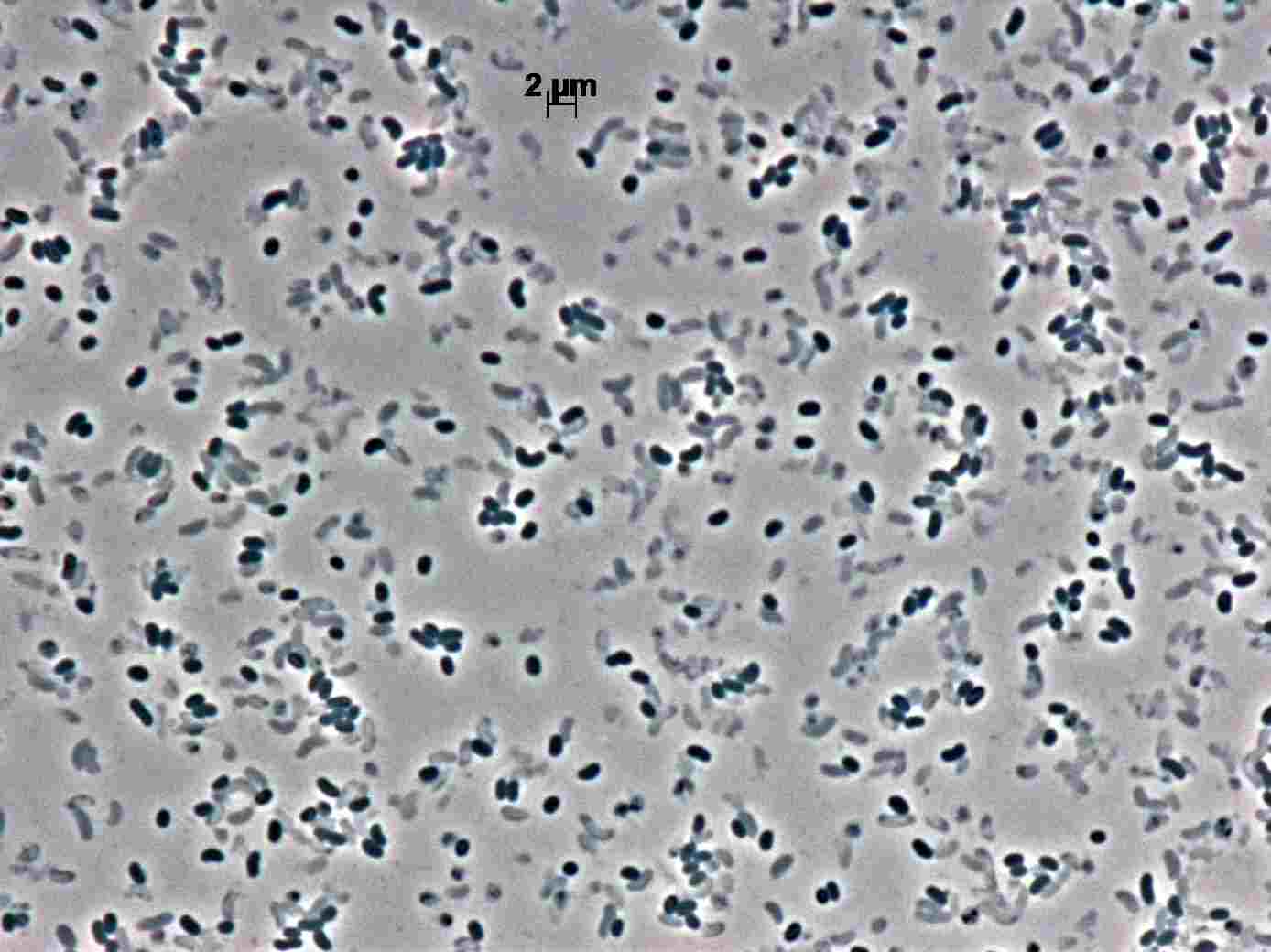
Image source: Wikipedia/Wikimedia
| Ecology, Host, and Life Cycle | |
|---|---|
| Oxygen requirements | Facultative |
| Optimal temperature | Not Available |
| Temperature range | Mesophilic |
| Habitat | HostAssociated |
| Biotic relationship | Free living |
| Host(s) | Homo sapiens |
| Cell arrangement | Singles |
| Sporulation | Nonsporulating |
| Energy source | Heterotroph |
| Pathogenicity | Animal |
Gene Summary
Adenine Count
1164388 bp
Thymine Count
1158702 bp
Guanine Count
931023 bp
Cytosine Count
924191 bp
Genome Length
4178304 bp
Protein-coding Genes
3673 genes
Non-Coding Genes
0 genes
# of Chromosomes/Plasmids
1
Genes
| Name | Locus Tag | UniProt ID | Strand Orientation | Gene Start/End | Protein Molecular Weight |
|---|---|---|---|---|---|
| flagellar basal body p-ring protein flgi | PL14_05235 | Not Available | Negative | 1189953 - 1191044 | 37785.6 |
| flagellar basal body l-ring protein flgh | PL14_05240 | Not Available | Negative | 1191092 - 1191871 | 27726.3 |
| flagellar basal-body rod protein flgg | PL14_05245 | Not Available | Negative | 1191895 - 1192683 | 27978.1 |
| flagellar basal-body rod protein flgf | PL14_05250 | Not Available | Negative | 1192705 - 1193454 | 26727.1 |
| flagellar hook protein flge | PL14_05255 | Not Available | Negative | 1193652 - 1194956 | 47163.5 |
| flagellar hook assembly protein flgd | PL14_05260 | Not Available | Negative | 1195000 - 1195707 | 24927.6 |
| flagellar basal body rod protein flgc | PL14_05265 | Not Available | Negative | 1195724 - 1196140 | 15147.8 |
| flagellar basal body rod protein flgb | PL14_05270 | Not Available | Negative | 1196145 - 1196540 | 14130.7 |
| protein-glutamate o-methyltransferase | PL14_05275 | Not Available | Negative | 1196807 - 1197634 | 30826.6 |
| chemotaxis protein chev | PL14_05280 | Not Available | Negative | 1197645 - 1198571 | 34081.3 |
Pathways
0 pathways
No pathways found
No metabolic pathways have been associated with this bacterium yet.
Health Effects
| Health Condition | Relation | Reference |
|---|---|---|
| Vibriosis | Causes | PMC8416912 |
| Vibriosis | Causes | PMC11577842 |
| Vibriosis | Causes | PMC11790442 |
| Hemorrhagic septicemia | Causes | PMC11790442 |


