Kingdom
Pseudomonadati
Phylum
Pseudomonadota
Class
Gammaproteobacteria
Order
Enterobacterales
Family
Yersiniaceae
Genus
Yersinia
Description
Taxonomy
| Kingdom | Pseudomonadati |
|---|---|
| Phylum | Pseudomonadota |
| Class | Gammaproteobacteria |
| Order | Enterobacterales |
| Family | Yersiniaceae |
| Genus | Yersinia |
| Species | Yersinia aleksiciae |
| Strain | No strain |
Profile
| Physiology | |
|---|---|
| Gram staining properties | Negative |
| Shape | rod |
| Mobility | No |
| Flagellar presence | Yes |
| Number of membranes | Not Available |

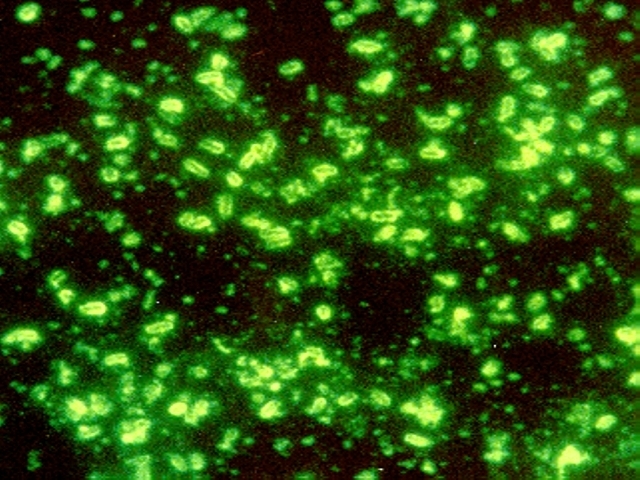
Image source: Wikipedia/Wikimedia
| Ecology, Host, and Life Cycle | |
|---|---|
| Oxygen requirements | Aerobe |
| Optimal temperature | 30 |
| Temperature range | Mesophilic |
| Habitat | Animal intestinal microflora |
| Biotic relationship | Not Available |
| Host(s) | Homo sapiens |
| Cell arrangement | Not Available |
| Sporulation | Nonsporulating |
| Energy source | Chemoheterotroph |
| Pathogenicity | Not Available |
Gene Summary
Adenine Count
1145460 bp
Thymine Count
1154891 bp
Guanine Count
1098970 bp
Cytosine Count
1091201 bp
Genome Length
4490614 bp
Protein-coding Genes
3962 genes
Non-Coding Genes
187 genes
# of Chromosomes/Plasmids
1
Genes
| Name | Locus Tag | UniProt ID | Strand Orientation | Gene Start/End | Protein Molecular Weight |
|---|---|---|---|---|---|
| utp-glucose-1-phosphate uridylyltransferase | ERS008460_00768 | Not Available | Positive | 865749 - 866639 | 32311.6 |
| utp-glucose-1-phosphate uridylyltransferase | ERS008460_00769 | Not Available | Positive | 866704 - 867597 | 32441.3 |
| 6-phosphogluconate dehydrogenase | ERS008460_00770 | Not Available | Positive | 867867 - 869276 | 51652.3 |
| bifunctional phosphoribosyl-amp cyclohydrolase /phosphoribosyl-atp pyrophosphatase | ERS008460_00771 | Not Available | Negative | 869423 - 870037 | 22738.0 |
| imidazole glycerol phosphate synthase subunit hisf | ERS008460_00772 | Not Available | Negative | 870031 - 870807 | 28528.0 |
| 1-(5-phosphoribosyl)-5-[(5- phosphoribosylamino)methylideneamino] imidazole-4-carboxamide isomerase | ERS008460_00773 | Not Available | Negative | 870789 - 871526 | 26763.1 |
| imidazole glycerol phosphate synthase subunit hish | ERS008460_00774 | Not Available | Negative | 871532 - 872122 | 21229.7 |
| imidazole glycerol-phosphate dehydratase/histidinol phosphatase | ERS008460_00775 | Not Available | Negative | 872122 - 873189 | 39924.7 |
| histidinol-phosphate aminotransferase | ERS008460_00776 | Not Available | Negative | 873186 - 874310 | 41278.6 |
| bifunctional histidinal dehydrogenase/ histidinol dehydrogenase | ERS008460_00777 | Not Available | Negative | 874307 - 875632 | 47138.2 |
Pathways
0 pathways
No pathways found
No metabolic pathways have been associated with this bacterium yet.
Health Effects
No health effects information available for this bacterium.