Kingdom
Pseudomonadati
Phylum
Pseudomonadota
Class
Gammaproteobacteria
Order
Enterobacterales
Family
Yersiniaceae
Genus
Yersinia
Description
Taxonomy
| Kingdom | Pseudomonadati |
|---|---|
| Phylum | Pseudomonadota |
| Class | Gammaproteobacteria |
| Order | Enterobacterales |
| Family | Yersiniaceae |
| Genus | Yersinia |
| Species | Yersinia aleksiciae |
| Strain | No strain |
Profile
| Physiology | |
|---|---|
| Gram staining properties | Negative |
| Shape | rod |
| Mobility | No |
| Flagellar presence | Yes |
| Number of membranes | Not Available |

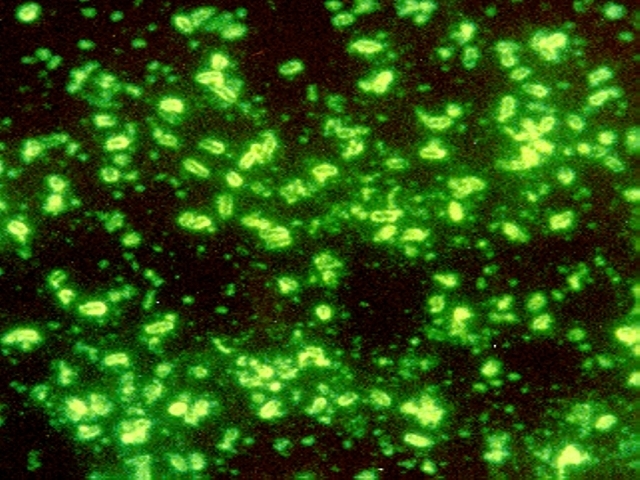
Image source: Wikipedia/Wikimedia
| Ecology, Host, and Life Cycle | |
|---|---|
| Oxygen requirements | Aerobe |
| Optimal temperature | 30 |
| Temperature range | Mesophilic |
| Habitat | Animal intestinal microflora |
| Biotic relationship | Not Available |
| Host(s) | Homo sapiens |
| Cell arrangement | Not Available |
| Sporulation | Nonsporulating |
| Energy source | Chemoheterotroph |
| Pathogenicity | Not Available |
Gene Summary
Adenine Count
1145460 bp
Thymine Count
1154891 bp
Guanine Count
1098970 bp
Cytosine Count
1091201 bp
Genome Length
4490614 bp
Protein-coding Genes
3962 genes
Non-Coding Genes
187 genes
# of Chromosomes/Plasmids
1
Genes
| Name | Locus Tag | UniProt ID | Strand Orientation | Gene Start/End | Protein Molecular Weight |
|---|---|---|---|---|---|
| putative flagellar protein lafd | ERS008460_02241 | Not Available | Positive | 2424214 - 2424543 | 12422.8 |
| flagellar hook-length control protein flik | ERS008460_02242 | Not Available | Positive | 2424540 - 2425547 | 36534.6 |
| putative flagellar biogenesis protein | ERS008460_02243 | Not Available | Positive | 2425558 - 2426010 | 16919.9 |
| putative rna polymerase sigma factor for flagellar operon | ERS008460_02244 | Not Available | Positive | 2426016 - 2426711 | 26723.0 |
| lateral flagellar motor protein a | ERS008460_02245 | Not Available | Positive | 2426727 - 2427593 | 31848.8 |
| flagellar motor protein | ERS008460_02246 | Not Available | Positive | 2427593 - 2428501 | 33741.4 |
| outer membrane lipoprotein | ERS008460_02247 | Not Available | Negative | 2428633 - 2429100 | 15423.3 |
| putative dna-binding protein | ERS008460_02248 | Not Available | Negative | 2429649 - 2430236 | 21067.9 |
| uncharacterised protein | ERS008460_02249 | Not Available | Negative | 2430283 - 2430507 | 8551.03 |
| uncharacterised protein | ERS008460_02250 | Not Available | Negative | 2430533 - 2430739 | 8203.01 |
Pathways
0 pathways
No pathways found
No metabolic pathways have been associated with this bacterium yet.
Health Effects
No health effects information available for this bacterium.