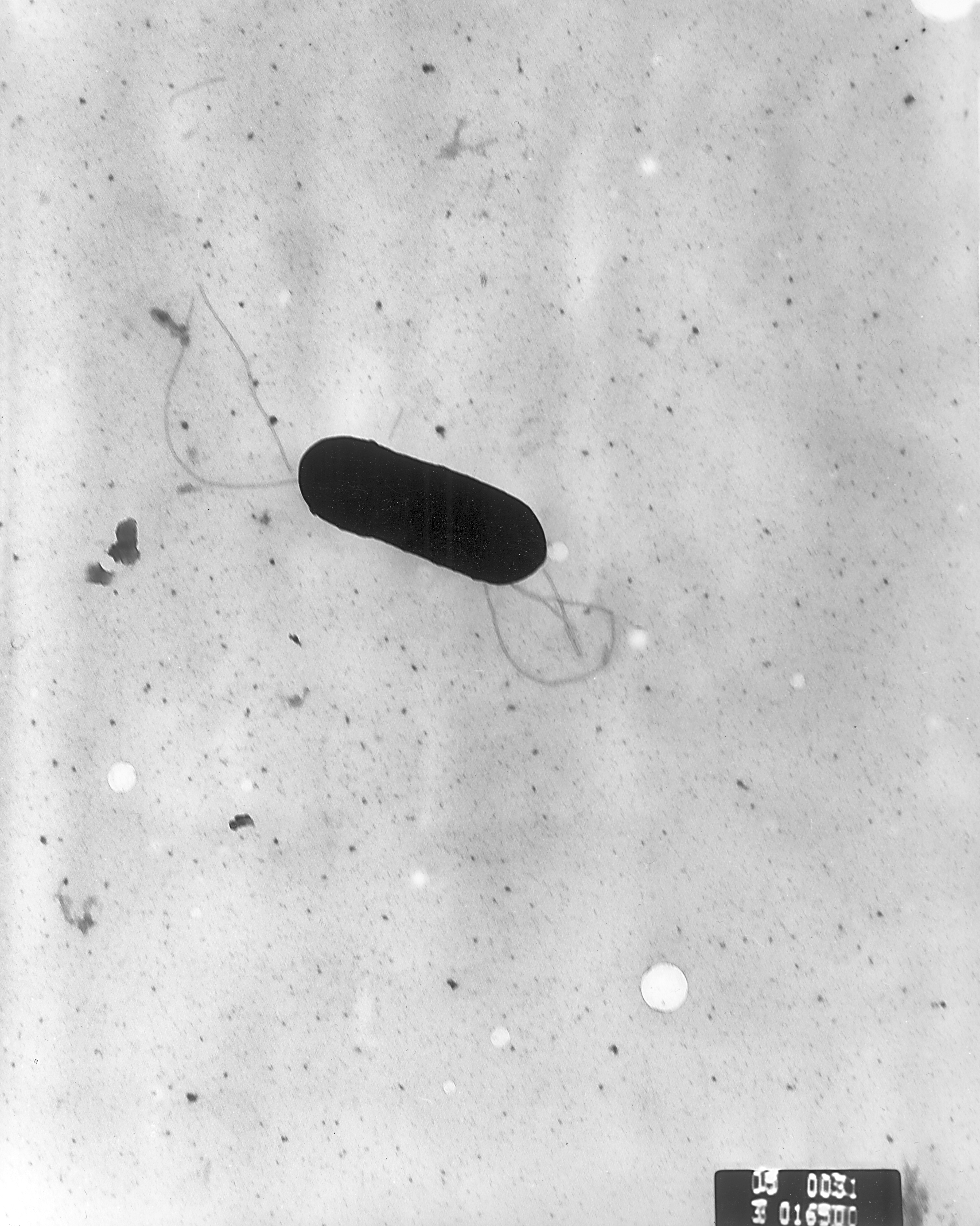
Listeria grayi

Gram-positiveMotileFacultative anaerobe

Kingdom

Bacillati

Phylum

Bacillota

Class

Bacilli

Order

Caryophanales

Family

Listeriaceae

Genus

Listeria

Description

Listeria grayi is a Gram-positive, rod-shaped bacterium that falls under the category of psychrotolerant organisms, thriving best in cooler temperatures while also capable of growth at higher temperatures. As a heterotroph, it derives its energy from organic compounds, which it metabolizes in various environments, making it adaptable to diverse growth conditions. This organism is typically found in various body sites across different species, including soil, water, and decaying organic matter, as well as in some animal intestines. The Gram-positive characteristic of Listeria grayi indicates a thick peptidoglycan layer in its cell wall, which can confer resistance to certain environmental stresses as well as antibiotics. Its rod-like shape not only aids in motility but also allows for efficient nutrient uptake and reproduction. Psychrotolerant bacteria like Listeria grayi can flourish at low temperatures, an adaptation that enables them to survive in cold environments, making them a concern in food safety, especially in refrigerated foods. As a heterotroph, Listeria grayi relies on the organic matter from its surroundings for growth, thriving on a variety of organic nutrients available in its environment. It is classified as a facultative anaerobe, which means it can grow in both the presence and absence of oxygen. This flexibility allows it to colonize various ecological niches and enhances its potential for survival in fluctuating conditions. Listeria grayi is often associated with foodborne illness, particularly in relation to contaminated dairy products and vegetables. Its ability to survive and even proliferate at refrigeration temperatures has made it a significant pathogen in food safety discussions, prompting researchers to study its mechanisms of resistance and pathogenicity closely. This bacterium plays an essential role in understanding microbial ecology and the implications of bacterial contamination in food systems.

Taxonomy

KingdomBacillati
PhylumBacillota
ClassBacilli
OrderCaryophanales
FamilyListeriaceae
GenusListeria
SpeciesListeria grayi
StrainNo strain

Profile

Physiology
Gram staining propertiesPositive
ShapeNot Available
MobilityYes
Flagellar presenceYes
Number of membranesNot Available
Image of Listeria grayi
Image source: Wikipedia/Wikimedia
Ecology, Host, and Life Cycle
Oxygen requirementsFacultative anaerobe
Optimal temperatureNot Available
Temperature rangeNot Available
Habitatvegetation
Biotic relationshipNot Available
Host(s)Not Available
Cell arrangementNot Available
SporulationNot Available
Energy sourceNot Available
PathogenicityHuman; Non-pathogenic

Genome Summary

Listeria grayi strain NCTC 10812 chromosome 1, complete sequence.

Gene Summary

Adenine Count

800769 bp

Thymine Count

806592 bp

Guanine Count

572704 bp

Cytosine Count

571039 bp

Genome Length

2751104 bp

Protein-coding Genes

2649 genes

Non-Coding Genes

100 genes

# of Chromosomes/Plasmids

2

Genes

NameLocus TagUniProt IDStrand OrientationGene Start/EndProtein Molecular Weight
uncharacterised proteinNCTC10815_03067Not AvailableNegative2568584 - 256903317754.3
uncharacterised proteinNCTC10815_03068Not AvailableNegative2569261 - 256963814003.1
uncharacterised proteinNCTC10815_03069Not AvailableNegative2569656 - 257015019057.4
uncharacterised proteinNCTC10815_03070Not AvailableNegative2570135 - 257041010654.0
uncharacterised proteinNCTC10815_03071Not AvailablePositive2570554 - 25707969581.54
uncharacterised proteinNCTC10815_03072Not AvailableNegative2570828 - 25709354319.53
integrase core domainNCTC10815_03073Not AvailableNegative2571026 - 257170626971.8
zinc-transporting atpaseNCTC10815_03074Not AvailablePositive2572467 - 257433267570.4
uncharacterised proteinNCTC10815_03075Not AvailableNegative2574747 - 257504011679.3
uncharacterised proteinNCTC10815_03076Not AvailableNegative2575710 - 257609614835.1

Displaying genes 5761 – 5770 of 5806 in total

Pathways

0 pathways

No pathways found

No metabolic pathways have been associated with this bacterium yet.

Metabolites

188 records
Metabolite IDMetabolite nameStructureCAS number
BASm0000237(R)-4'-phosphopantothenateC9H18NO8PChemical structure of (R)-4'-phosphopantothenateNot available
Average299.2149Da
Monoisotopic299.0770031Da
BASm00002512-dehydropantoateC6H9O4Chemical structure of 2-dehydropantoateNot available
Average145.1333Da
Monoisotopic145.050083776Da
BASm0000377(S)-malateC4H4O5Chemical structure of (S)-malateNot available
Average132.0716Da
Monoisotopic132.005873238Da
BASm0000503L-rhamnoseC6H12O5Chemical structure of L-rhamnose3615-41-6
Average164.1565Da
Monoisotopic164.0684735Da
BASm0000893crotonobetaineC7H13NO2Chemical structure of crotonobetaine927-89-9
Average143.1836Da
Monoisotopic143.0946287Da
BASm0000989GlycerolC3H8O3Chemical structure of Glycerol56-81-5
Average92.0938Da
Monoisotopic92.04734412Da
BASm0001035indole-3-pyruvateC11H8NO3Chemical structure of indole-3-pyruvate35656-49-6
Average202.1861Da
Monoisotopic202.0504181Da
BASm0001167triphosphateO10P3Chemical structure of triphosphate14127-68-5
Average252.9153Da
Monoisotopic252.8704308Da
BASm00011795-hydroxyisourateC5H4N4O4Chemical structure of 5-hydroxyisourateNot available
Average184.1097Da
Monoisotopic184.0232546Da
BASm0001661Cu(2+)CuChemical structure of Cu(2+)7440-50-8
Average63.546Da
Monoisotopic62.929601079Da

Displaying 1–10 of 188 metabolites

Health Effects

No health effects information available for this bacterium.