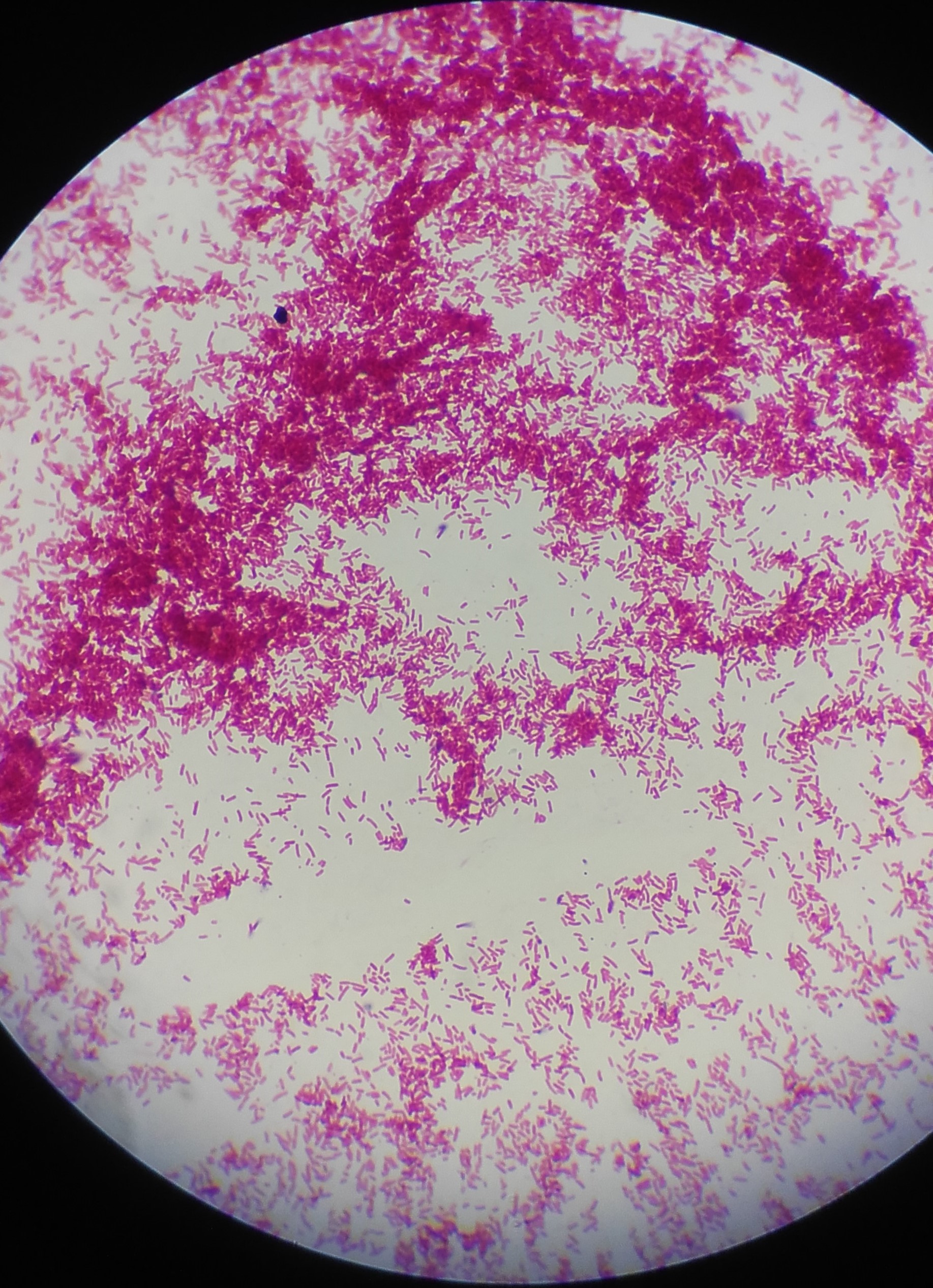
Lactobacillus acidophilus

Gram-positiveRodNon-motileFacultative anaerobe

Kingdom

Bacillati

Phylum

Bacillota

Class

Bacilli

Order

Lactobacillales

Family

Lactobacillaceae

Genus

Lactobacillus

Description

Lactobacillus acidophilus is a gram-positive, rod-shaped microbe that thrives in mesophilic temperatures, is a chemoheterotroph, and can be found in various body sites, including the mouth, gut, and vagina, across different species. As a gram-positive microbe, Lactobacillus acidophilus has a thick peptidoglycan layer in its cell wall, providing it with a distinct purple stain under a microscope. Its rod-shaped morphology allows it to easily colonize and adhere to surfaces, making it a common inhabitant of the human body. As a mesophile, Lactobacillus acidophilus prefers moderate temperatures, typically between 20-45°C, which is ideal for its growth and survival in the human body. As a chemoheterotroph, it relies on organic compounds for energy and carbon, breaking down complex molecules into simpler ones to sustain its metabolic processes. Lactobacillus acidophilus is a facultative anaerobe, capable of growing in both aerobic and anaerobic environments, although it prefers the latter. This adaptability allows it to thrive in various ecosystems, from the oxygen-rich environment of the mouth to the oxygen-poor environment of the gut. Its ability to colonize different body sites has led to its widespread distribution across different species, including humans, animals, and even plants. Lactobacillus acidophilus plays a crucial role in maintaining the balance of the gut microbiome, producing lactic acid and other compounds that help to regulate the pH and prevent the growth of pathogenic microbes. It has been found to have a symbiotic relationship with its hosts, providing essential nutrients and protecting against infections, and is often used as a probiotic in food and dietary supplements to promote gut health.

Taxonomy

KingdomBacillati
PhylumBacillota
ClassBacilli
OrderLactobacillales
FamilyLactobacillaceae
GenusLactobacillus
SpeciesLactobacillus acidophilus
StrainNo strain

Profile

Physiology
Gram staining propertiesPositive
ShapeRod
MobilityNo
Flagellar presenceYes
Number of membranes1
Image of Lactobacillus acidophilus
Image source: Wikipedia/Wikimedia
Ecology, Host, and Life Cycle
Oxygen requirementsFacultative anaerobe
Optimal temperature25
Temperature rangeMesophilic
HabitatMultiple
Biotic relationshipFree living
Host(s)Homo sapiens, Gallus gallus, Aves
Cell arrangementChains
SporulationNot Available
Energy sourceNot Available
PathogenicityNot Available

Genome Summary

Lactobacillus acidophilus strain UBLA-34 scaffold34, whole genome

Gene Summary

Adenine Count

633828 bp

Thymine Count

642497 bp

Guanine Count

326994 bp

Cytosine Count

348180 bp

Genome Length

1953966 bp

Protein-coding Genes

1875 genes

Non-Coding Genes

65 genes

# of Chromosomes/Plasmids

1

Genes

NameLocus TagUniProt IDStrand OrientationGene Start/EndProtein Molecular Weight
4-hydroxy-tetrahydrodipicolinate synthaseD7H66_02160Not AvailableNegative438852 - 43978734444.4
n-acetyldiaminopimelate deacetylaseD7H66_02165Not AvailableNegative439793 - 44094442316.2
2,3,4,5-tetrahydropyridine-2,6-dicarboxylate n-acetyltransferaseD7H66_02170Not AvailableNegative440947 - 44165725256.8
diaminopimelate decarboxylaseD7H66_02175Not AvailableNegative441678 - 44298547962.2
aspartate kinaseD7H66_02180Not AvailablePositive443464 - 44481950397.6
diaminopimelate epimeraseD7H66_02185Not AvailablePositive444831 - 44583537364.6
yiha family ribosome biogenesis gtp-binding proteinD7H66_02190Not AvailableNegative445867 - 44645722503.2
atp-dependent clp protease atp-binding subunit clpxD7H66_02195Not AvailableNegative446447 - 44770946644.2
trigger factorD7H66_02200Not AvailableNegative447836 - 44916449307.8
elongation factor tuD7H66_02205Not AvailableNegative449310 - 45050043582.1

Displaying genes 421 – 430 of 1940 in total

Pathways

0 pathways

No pathways found

No metabolic pathways have been associated with this bacterium yet.

Metabolites

55 records
Metabolite IDMetabolite nameStructureCAS number
BASm0002051D-fructoseC6H12O6Chemical structure of D-fructose57-48-7
Average180.1559Da
Monoisotopic180.0633881Da
BASm0002909O-acetyl-L-homoserineC6H11NO4Chemical structure of O-acetyl-L-homoserine7540-67-2
Average161.1558Da
Monoisotopic161.0688078Da
BASm0014032Acetic acidC2H4O2Chemical structure of Acetic acid64-19-7
Average60.052Da
Monoisotopic60.021129372Da
BASm0014039L-Lactic acidC3H6O3Chemical structure of L-Lactic acid79-33-4
Average90.0779Da
Monoisotopic90.031694058Da
BASm0014041Oleic acidC18H34O2Chemical structure of Oleic acid112-80-1
Average282.4614Da
Monoisotopic282.255880332Da
BASm0014055Linoleic acidC18H32O2Chemical structure of Linoleic acid60-33-3
Average280.4455Da
Monoisotopic280.240230268Da
BASm0014059Stearic acidC18H36O2Chemical structure of Stearic acid57-11-4
Average284.4772Da
Monoisotopic284.271530396Da
BASm0014063Taurodeoxycholic acidC26H45NO6SChemical structure of Taurodeoxycholic acid516-50-7
Average499.704Da
Monoisotopic499.296758867Da
BASm0014068Nicotinic acidC6H5NO2Chemical structure of Nicotinic acid59-67-6
Average123.1094Da
Monoisotopic123.032028409Da
BASm0014079FuranC4H4OChemical structure of Furan110-00-9
Average68.074Da
Monoisotopic68.02621475Da

Displaying 1–10 of 55 metabolites

Health Effects

No health effects information available for this bacterium.