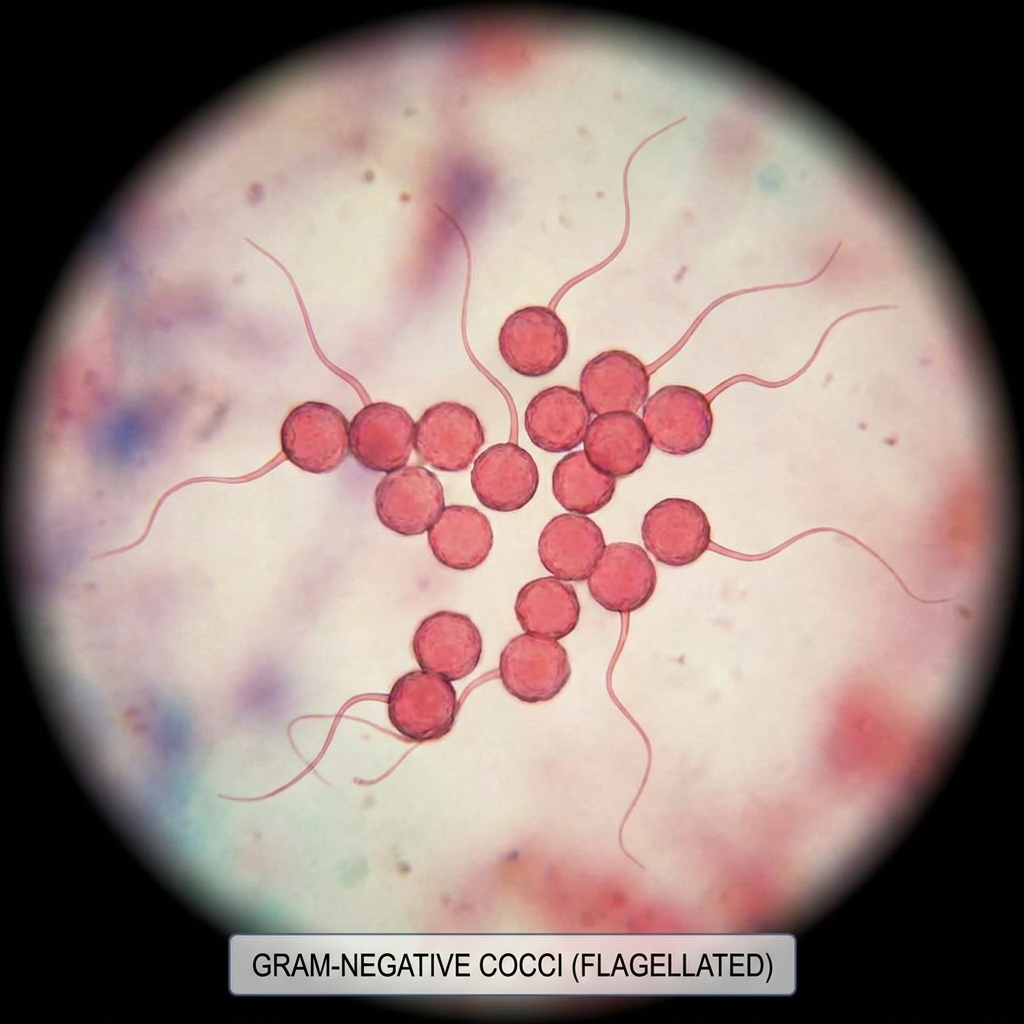
Kingdom
Pseudomonadati
Phylum
Pseudomonadota
Class
Gammaproteobacteria
Order
Vibrionales
Family
Vibrionaceae
Genus
Photobacterium
Description
Taxonomy
| Kingdom | Pseudomonadati |
|---|---|
| Phylum | Pseudomonadota |
| Class | Gammaproteobacteria |
| Order | Vibrionales |
| Family | Vibrionaceae |
| Genus | Photobacterium |
| Species | Photobacterium angustum |
| Strain | No strain |
Profile
| Physiology | |
|---|---|
| Gram staining properties | Negative |
| Shape | Not Available |
| Mobility | Not Available |
| Flagellar presence | Yes |
| Number of membranes | Not Available |
| Ecology, Host, and Life Cycle | |
|---|---|
| Oxygen requirements | aerobic |
| Optimal temperature | Not Available |
| Temperature range | Not Available |
| Habitat | Botany Bay; Marine; sea; surface coastal waters; surface coastal waters in Botany Bay (Sydney), Australia |
| Biotic relationship | Not Available |
| Host(s) | Not Available |
| Cell arrangement | Not Available |
| Sporulation | Not Available |
| Energy source | Not Available |
| Pathogenicity | Not Available |
Gene Summary
Adenine Count
1454850 bp
Thymine Count
1430419 bp
Guanine Count
919404 bp
Cytosine Count
979503 bp
Genome Length
4784176 bp
Protein-coding Genes
4154 genes
Non-Coding Genes
149 genes
# of Chromosomes/Plasmids
1
Genes
| Name | Locus Tag | UniProt ID | Strand Orientation | Gene Start/End | Protein Molecular Weight |
|---|---|---|---|---|---|
| glutathione peroxidase | CTM95_11465 | Not Available | Positive | 2579079 - 2579807 | 26622.6 |
| argininosuccinate lyase | CTM95_11470 | Not Available | Negative | 2579955 - 2581832 | 69862.8 |
| argininosuccinate synthase | CTM95_11475 | Not Available | Negative | 2581925 - 2583133 | 44291.6 |
| acetylglutamate kinase | CTM95_11480 | Not Available | Negative | 2583207 - 2583986 | 26617.5 |
| n-acetyl-gamma-glutamyl-phosphate reductase | CTM95_11485 | Not Available | Negative | 2583997 - 2585010 | 36272.6 |
| phosphoenolpyruvate carboxylase | CTM95_11490 | Not Available | Positive | 2585637 - 2588267 | 98818.2 |
| padr family transcriptional regulator | CTM95_11495 | Not Available | Positive | 2588677 - 2589240 | 21691.7 |
| bifunctional aspartate kinase/homoserine dehydrogenase ii | CTM95_11500 | Not Available | Negative | 2589375 - 2591789 | 88748.6 |
| o-succinylhomoserine (thiol)-lyase | CTM95_11505 | Not Available | Negative | 2591789 - 2592955 | 41740.8 |
| met regulon transcriptional regulator metj | CTM95_11510 | Not Available | Positive | 2593260 - 2593577 | 11996.2 |
Pathways
0 pathways
No pathways found
No metabolic pathways have been associated with this bacterium yet.
Health Effects
No health effects information available for this bacterium.