Kingdom
Pseudomonadati
Phylum
Pseudomonadota
Class
Gammaproteobacteria
Order
Enterobacterales
Family
Yersiniaceae
Genus
Yersinia
Description
Taxonomy
| Kingdom | Pseudomonadati |
|---|---|
| Phylum | Pseudomonadota |
| Class | Gammaproteobacteria |
| Order | Enterobacterales |
| Family | Yersiniaceae |
| Genus | Yersinia |
| Species | Yersinia pseudotuberculosis |
| Strain | No strain |
Profile
| Physiology | |
|---|---|
| Gram staining properties | Negative |
| Shape | Rod |
| Mobility | Yes |
| Flagellar presence | Yes |
| Number of membranes | 2 |

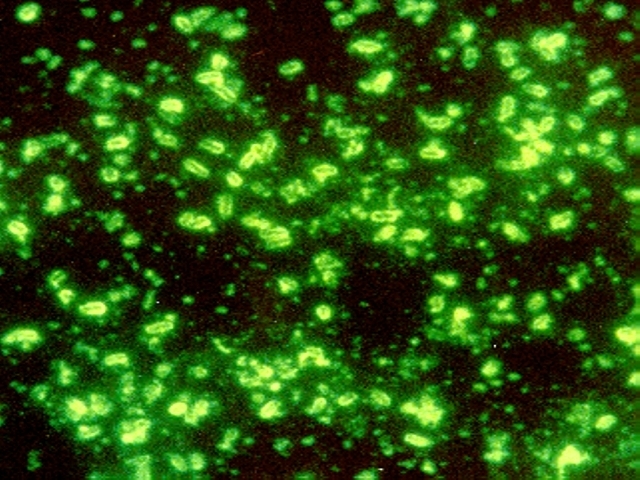
Image source: Wikipedia/Wikimedia
| Ecology, Host, and Life Cycle | |
|---|---|
| Oxygen requirements | Facultative anaerobe |
| Optimal temperature | 28 |
| Temperature range | Mesophilic |
| Habitat | Multiple |
| Biotic relationship | Free living |
| Host(s) | Homo sapiens, Metazoa, Sus scrofa |
| Cell arrangement | Singles |
| Sporulation | Not Available |
| Energy source | Heterotroph |
| Pathogenicity | Human |
Genome Summary
Yersinia pseudotuberculosis strain FDAARGOS_580 plasmid unnamed,
Gene Summary
Adenine Count
19711 bp
Thymine Count
19126 bp
Guanine Count
15846 bp
Cytosine Count
15629 bp
Genome Length
70312 bp
Protein-coding Genes
78 genes
Non-Coding Genes
20 genes
# of Chromosomes/Plasmids
3
Genes
| Name | Locus Tag | UniProt ID | Strand Orientation | Gene Start/End | Protein Molecular Weight |
|---|---|---|---|---|---|
| 3-deoxy-7-phosphoheptulonate synthase | EGX52_RS20625 | Not Available | Positive | 4366239 - 4367285 | 38300.1 |
| protein adenylyltransferase selo | EGX52_RS20630 | Not Available | Negative | 4367454 - 4368917 | 56032.4 |
| lipoate--protein ligase a | EGX52_RS20635 | Not Available | Negative | 4368969 - 4369985 | 37996.1 |
| nlpc/p60 family protein | EGX52_RS20640 | Not Available | Negative | 4370110 - 4370574 | 17578.0 |
| hypothetical protein | EGX52_RS20645 | Not Available | Positive | 4370515 - 4370697 | 7010.38 |
| 4-amino-4-deoxy-l-arabinose-phosphoundecaprenol flippase subunit arnf | EGX52_RS20650 | Not Available | Negative | 4370854 - 4371240 | 14224.3 |
| 4-amino-4-deoxy-l-arabinose-phosphoundecaprenol flippase subunit arne | EGX52_RS20655 | Not Available | Negative | 4371237 - 4371581 | 12942.6 |
| lipid iv(a) 4-amino-4-deoxy-l-arabinosyltransferase | EGX52_RS20660 | Not Available | Negative | 4371578 - 4373242 | 62238.9 |
| 4-deoxy-4-formamido-l-arabinose- phosphoundecaprenol deformylase | EGX52_RS20665 | Not Available | Negative | 4373239 - 4374144 | 33506.1 |
| bifunctional udp-4-amino-4-deoxy-l-arabinose formyltransferase/udp-glucuronic acid oxidase arna | EGX52_RS20670 | Not Available | Negative | 4374141 - 4376144 | 74896.8 |
Pathways
22 pathways
No pathways found
No metabolic pathways have been associated with this bacterium yet.
Health Effects
| Health Condition | Relation | Reference |
|---|---|---|
| Gastroenteritis | Causes | PMC11654157 |
| Pseudoappendicitis | Causes | PMC11654157 |
| Multiple organ dysfunction syndrome | Causes | PMC11654157 |
| Mods | Causes | PMC11654157 |
| Liver abscess | Causes | PMC11654157 |
| Splenic infarction | Causes | PMC11654157 |
| Sepsis | Causes | PMC11654157 |
| Septic shock | Causes | PMC11654157 |
| Acute kidney injury | Causes | PMC11654157 |
| Acute liver injury | Causes | PMC11654157 |