Kingdom
Pseudomonadati
Phylum
Pseudomonadota
Class
Gammaproteobacteria
Order
Enterobacterales
Family
Yersiniaceae
Genus
Yersinia
Description
Taxonomy
| Kingdom | Pseudomonadati |
|---|---|
| Phylum | Pseudomonadota |
| Class | Gammaproteobacteria |
| Order | Enterobacterales |
| Family | Yersiniaceae |
| Genus | Yersinia |
| Species | Yersinia pseudotuberculosis |
| Strain | No strain |
Profile
| Physiology | |
|---|---|
| Gram staining properties | Negative |
| Shape | Rod |
| Mobility | Yes |
| Flagellar presence | Yes |
| Number of membranes | 2 |

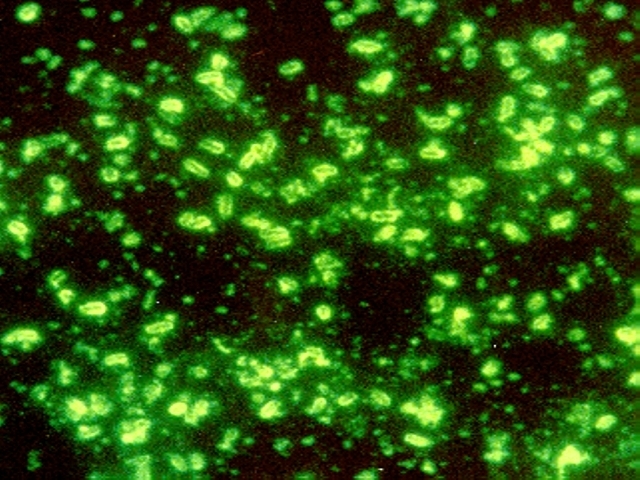
Image source: Wikipedia/Wikimedia
| Ecology, Host, and Life Cycle | |
|---|---|
| Oxygen requirements | Facultative anaerobe |
| Optimal temperature | 28 |
| Temperature range | Mesophilic |
| Habitat | Multiple |
| Biotic relationship | Free living |
| Host(s) | Homo sapiens, Metazoa, Sus scrofa |
| Cell arrangement | Singles |
| Sporulation | Not Available |
| Energy source | Heterotroph |
| Pathogenicity | Human |
Genome Summary
Yersinia pseudotuberculosis strain FDAARGOS_580 plasmid unnamed,
Gene Summary
Adenine Count
19711 bp
Thymine Count
19126 bp
Guanine Count
15846 bp
Cytosine Count
15629 bp
Genome Length
70312 bp
Protein-coding Genes
78 genes
Non-Coding Genes
20 genes
# of Chromosomes/Plasmids
3
Genes
| Name | Locus Tag | UniProt ID | Strand Orientation | Gene Start/End | Protein Molecular Weight |
|---|---|---|---|---|---|
| hypothetical protein | EGX52_RS06950 | Not Available | Positive | 1421469 - 1422575 | 41381.9 |
| hypothetical protein | EGX52_RS06955 | Not Available | Negative | 1422690 - 1423151 | 17246.5 |
| high-affinity branched-chain amino acid abc transporter atp-binding protein livf | EGX52_RS06960 | Not Available | Negative | 1423379 - 1424080 | 25853.4 |
| high-affinity branched-chain amino acid abc transporter atp-binding protein livg | EGX52_RS06965 | Not Available | Negative | 1424125 - 1424892 | 28149.7 |
| high-affinity branched-chain amino acid abc transporter permease livm | EGX52_RS06970 | Not Available | Negative | 1424889 - 1426175 | 46510.4 |
| high-affinity branched-chain amino acid abc transporter permease livh | EGX52_RS06975 | Not Available | Negative | 1426172 - 1427098 | 32975.4 |
| branched-chain amino acid abc transporter substrate-binding protein | EGX52_RS06980 | Not Available | Negative | 1427279 - 1428394 | 39604.4 |
| aspartate 1-decarboxylase autocleavage activator panm | EGX52_RS06985 | Not Available | Positive | 1428816 - 1429208 | 15114.2 |
| rna polymerase sigma factor rpoh | EGX52_RS06990 | Not Available | Negative | 1429415 - 1430272 | 32701.9 |
| permease-like cell division protein ftsx | EGX52_RS06995 | Not Available | Negative | 1430583 - 1431536 | 34850.8 |
Pathways
22 pathways
No pathways found
No metabolic pathways have been associated with this bacterium yet.
Health Effects
| Health Condition | Relation | Reference |
|---|---|---|
| Gastroenteritis | Causes | PMC11654157 |
| Pseudoappendicitis | Causes | PMC11654157 |
| Multiple organ dysfunction syndrome | Causes | PMC11654157 |
| Mods | Causes | PMC11654157 |
| Liver abscess | Causes | PMC11654157 |
| Splenic infarction | Causes | PMC11654157 |
| Sepsis | Causes | PMC11654157 |
| Septic shock | Causes | PMC11654157 |
| Acute kidney injury | Causes | PMC11654157 |
| Acute liver injury | Causes | PMC11654157 |