Kingdom
Pseudomonadati
Phylum
Pseudomonadota
Class
Gammaproteobacteria
Order
Enterobacterales
Family
Yersiniaceae
Genus
Yersinia
Description
Taxonomy
| Kingdom | Pseudomonadati |
|---|---|
| Phylum | Pseudomonadota |
| Class | Gammaproteobacteria |
| Order | Enterobacterales |
| Family | Yersiniaceae |
| Genus | Yersinia |
| Species | Yersinia pseudotuberculosis |
| Strain | No strain |
Profile
| Physiology | |
|---|---|
| Gram staining properties | Negative |
| Shape | Rod |
| Mobility | Yes |
| Flagellar presence | Yes |
| Number of membranes | 2 |

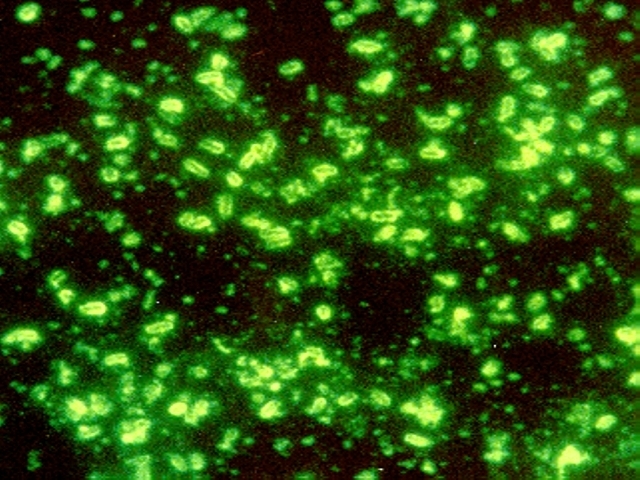
Image source: Wikipedia/Wikimedia
| Ecology, Host, and Life Cycle | |
|---|---|
| Oxygen requirements | Facultative anaerobe |
| Optimal temperature | 28 |
| Temperature range | Mesophilic |
| Habitat | Multiple |
| Biotic relationship | Free living |
| Host(s) | Homo sapiens, Metazoa, Sus scrofa |
| Cell arrangement | Singles |
| Sporulation | Not Available |
| Energy source | Heterotroph |
| Pathogenicity | Human |
Genome Summary
Yersinia pseudotuberculosis strain FDAARGOS_580 plasmid unnamed,
Gene Summary
Adenine Count
19711 bp
Thymine Count
19126 bp
Guanine Count
15846 bp
Cytosine Count
15629 bp
Genome Length
70312 bp
Protein-coding Genes
78 genes
Non-Coding Genes
20 genes
# of Chromosomes/Plasmids
3
Genes
| Name | Locus Tag | UniProt ID | Strand Orientation | Gene Start/End | Protein Molecular Weight |
|---|---|---|---|---|---|
| integrating conjugative element protein | EGX52_RS05980 | Not Available | Negative | 1210012 - 1211418 | 49846.0 |
| tigr03756 family integrating conjugative element protein | EGX52_RS05985 | Not Available | Negative | 1211439 - 1212392 | 34568.4 |
| tigr03757 family integrating conjugative element protein | EGX52_RS05990 | Not Available | Negative | 1212389 - 1212793 | 14983.0 |
| anti-phage defense-associated sirtuin dsr1 | EGX52_RS06000 | Not Available | Positive | 1213384 - 1217205 | 146095.0 |
| gluconate 5-dehydrogenase | EGX52_RS06005 | Not Available | Positive | 1217556 - 1218789 | 46194.1 |
| gnat family n-acetyltransferase | EGX52_RS06010 | Not Available | Positive | 1219020 - 1219568 | 21141.2 |
| hypothetical protein | EGX52_RS06015 | Not Available | Positive | 1219656 - 1219874 | 8510.31 |
| is110 family transposase | EGX52_RS06020 | Not Available | Negative | 1219948 - 1221186 | 47488.5 |
| sir2 family nad-dependent protein deacylase | EGX52_RS06025 | Not Available | Positive | 1221725 - 1223077 | 51698.1 |
| dead/deah box helicase | EGX52_RS06030 | Not Available | Negative | 1223840 - 1226038 | 81424.0 |
Pathways
22 pathways
No pathways found
No metabolic pathways have been associated with this bacterium yet.
Health Effects
| Health Condition | Relation | Reference |
|---|---|---|
| Gastroenteritis | Causes | PMC11654157 |
| Pseudoappendicitis | Causes | PMC11654157 |
| Multiple organ dysfunction syndrome | Causes | PMC11654157 |
| Mods | Causes | PMC11654157 |
| Liver abscess | Causes | PMC11654157 |
| Splenic infarction | Causes | PMC11654157 |
| Sepsis | Causes | PMC11654157 |
| Septic shock | Causes | PMC11654157 |
| Acute kidney injury | Causes | PMC11654157 |
| Acute liver injury | Causes | PMC11654157 |