Kingdom
Pseudomonadati
Phylum
Pseudomonadota
Class
Gammaproteobacteria
Order
Enterobacterales
Family
Yersiniaceae
Genus
Yersinia
Description
Taxonomy
| Kingdom | Pseudomonadati |
|---|---|
| Phylum | Pseudomonadota |
| Class | Gammaproteobacteria |
| Order | Enterobacterales |
| Family | Yersiniaceae |
| Genus | Yersinia |
| Species | Yersinia pestis |
| Strain | No strain |
Profile
| Physiology | |
|---|---|
| Gram staining properties | Negative |
| Shape | Rod |
| Mobility | Yes |
| Flagellar presence | Yes |
| Number of membranes | 2 |

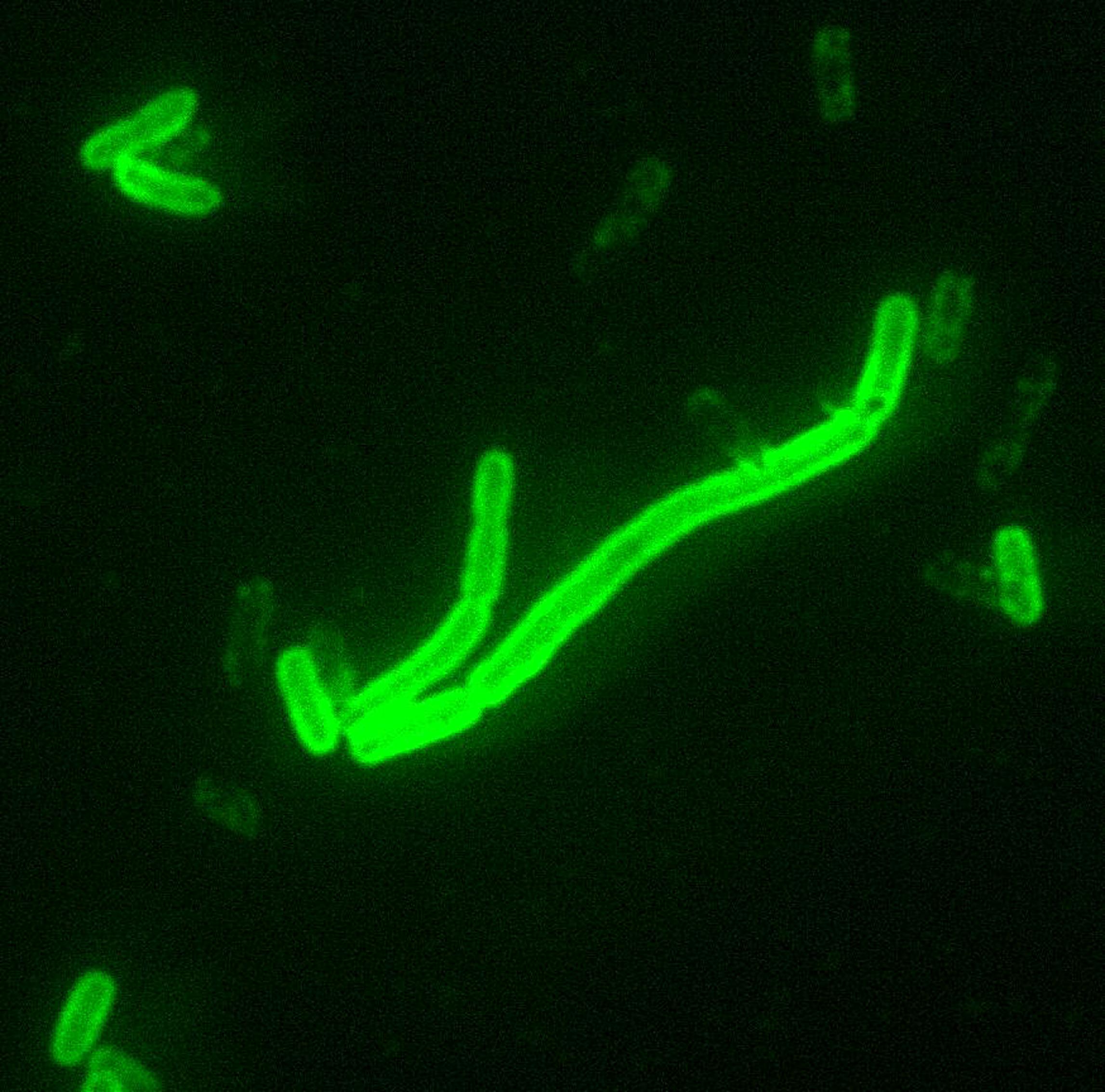
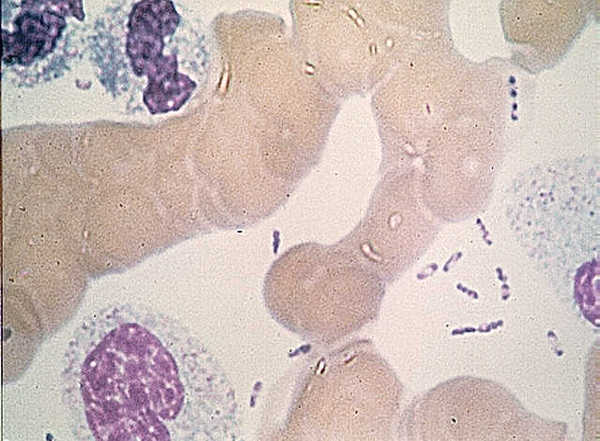
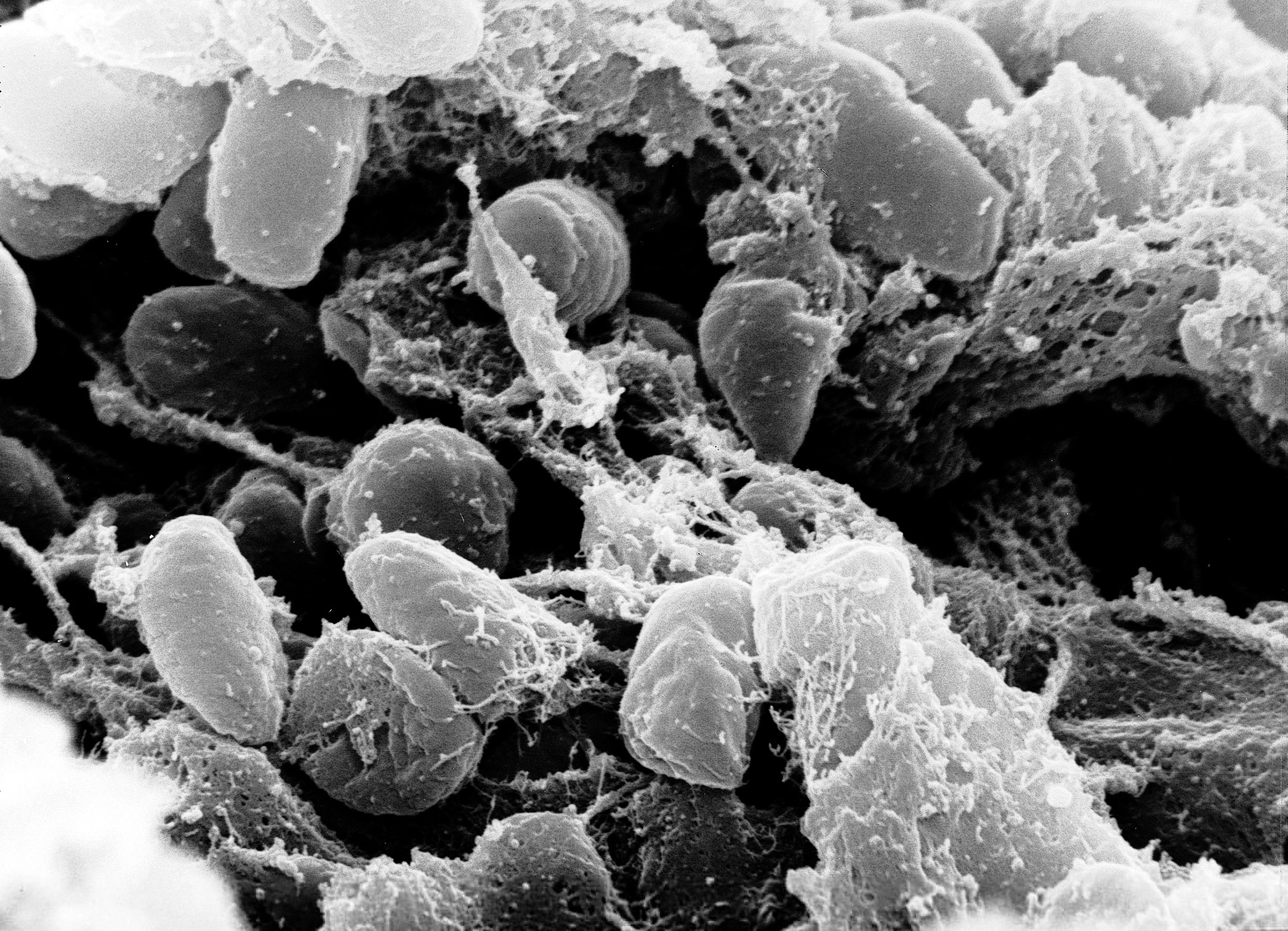
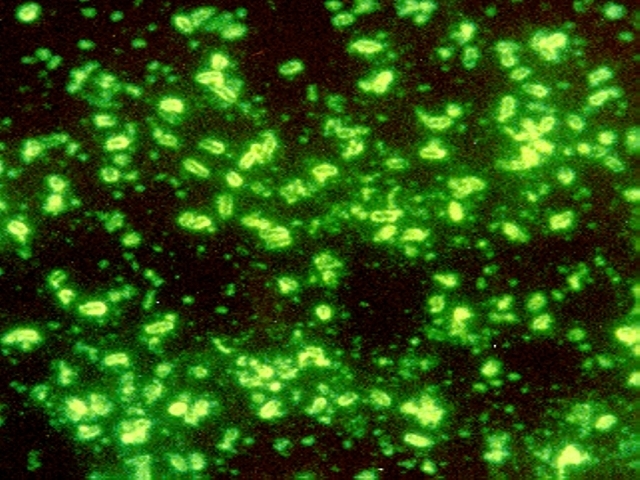
Image source: Wikipedia/Wikimedia
| Ecology, Host, and Life Cycle | |
|---|---|
| Oxygen requirements | Facultative anaerobe |
| Optimal temperature | 28 |
| Temperature range | Mesophilic |
| Habitat | Multiple |
| Biotic relationship | Free living |
| Host(s) | Homo sapiens, Siphonaptera, Metazoa |
| Cell arrangement | Singles |
| Sporulation | Not Available |
| Energy source | Heterotroph |
| Pathogenicity | Not Available |
Gene Summary
Adenine Count
Not Available
Thymine Count
Not Available
Guanine Count
Not Available
Cytosine Count
Not Available
Genome Length
Not Available
Protein-coding Genes
3661 genes
Non-Coding Genes
188 genes
# of Chromosomes/Plasmids
4
Genes
| Name | Locus Tag | UniProt ID | Strand Orientation | Gene Start/End | Protein Molecular Weight |
|---|---|---|---|---|---|
| putative 3-phenylpropionic acid transporter | NCTC144_00786 | Not Available | Negative | 809425 - 810582 | 42465.9 |
| attachment invasion locus protein | NCTC144_00787 | Not Available | Negative | 810934 - 811473 | 19865.4 |
| serine hydroxymethyltransferase | NCTC144_00788 | Not Available | Negative | 811926 - 813179 | 45424.3 |
| bifunctional nitric oxide dioxygenase/dihydropteridine reductase 2 | NCTC144_00789 | Not Available | Positive | 813720 - 814910 | 44818.4 |
| dna-binding protein | NCTC144_00790 | Not Available | Positive | 815341 - 815937 | 22120.3 |
| dna-binding protein | NCTC144_00791 | Not Available | Positive | 815876 - 816274 | 15247.6 |
| nitrogen regulatory protein p-ii 1 | NCTC144_00792 | Not Available | Negative | 816443 - 816781 | 12456.2 |
| nad synthetase | NCTC144_00793 | Not Available | Negative | 816796 - 818418 | 59797.1 |
| two-component system response regulator | NCTC144_00794 | Not Available | Negative | 818578 - 819915 | 49323.9 |
| putative lipoprotein | NCTC144_00795 | Not Available | Negative | 819878 - 820945 | 39251.6 |
Pathways
1291 pathways
Health Effects
| Health Condition | Relation | Reference |
|---|---|---|
| Plague | Causes | PMC10229654 |
| Bubonic plague | Causes | PMC10229654 |
| Septicaemic plague | Causes | PMC10229654 |
| Pneumonic plague | Causes | PMC10229654 |
| Justinianic plague | Causes | PMC10229654 |
| Black death | Causes | PMC10229654 |
| Plague | Causes | PMC3047566 |
| Black death | Causes | PMC3216949 |
| Plague | Causes | PMC3216949 |
| Plague | Causes | PMC4644222 |