Kingdom
Pseudomonadati
Phylum
Pseudomonadota
Class
Gammaproteobacteria
Order
Enterobacterales
Family
Yersiniaceae
Genus
Yersinia
Description
Taxonomy
| Kingdom | Pseudomonadati |
|---|---|
| Phylum | Pseudomonadota |
| Class | Gammaproteobacteria |
| Order | Enterobacterales |
| Family | Yersiniaceae |
| Genus | Yersinia |
| Species | Yersinia pestis |
| Strain | No strain |
Profile
| Physiology | |
|---|---|
| Gram staining properties | Negative |
| Shape | Rod |
| Mobility | Yes |
| Flagellar presence | Yes |
| Number of membranes | 2 |

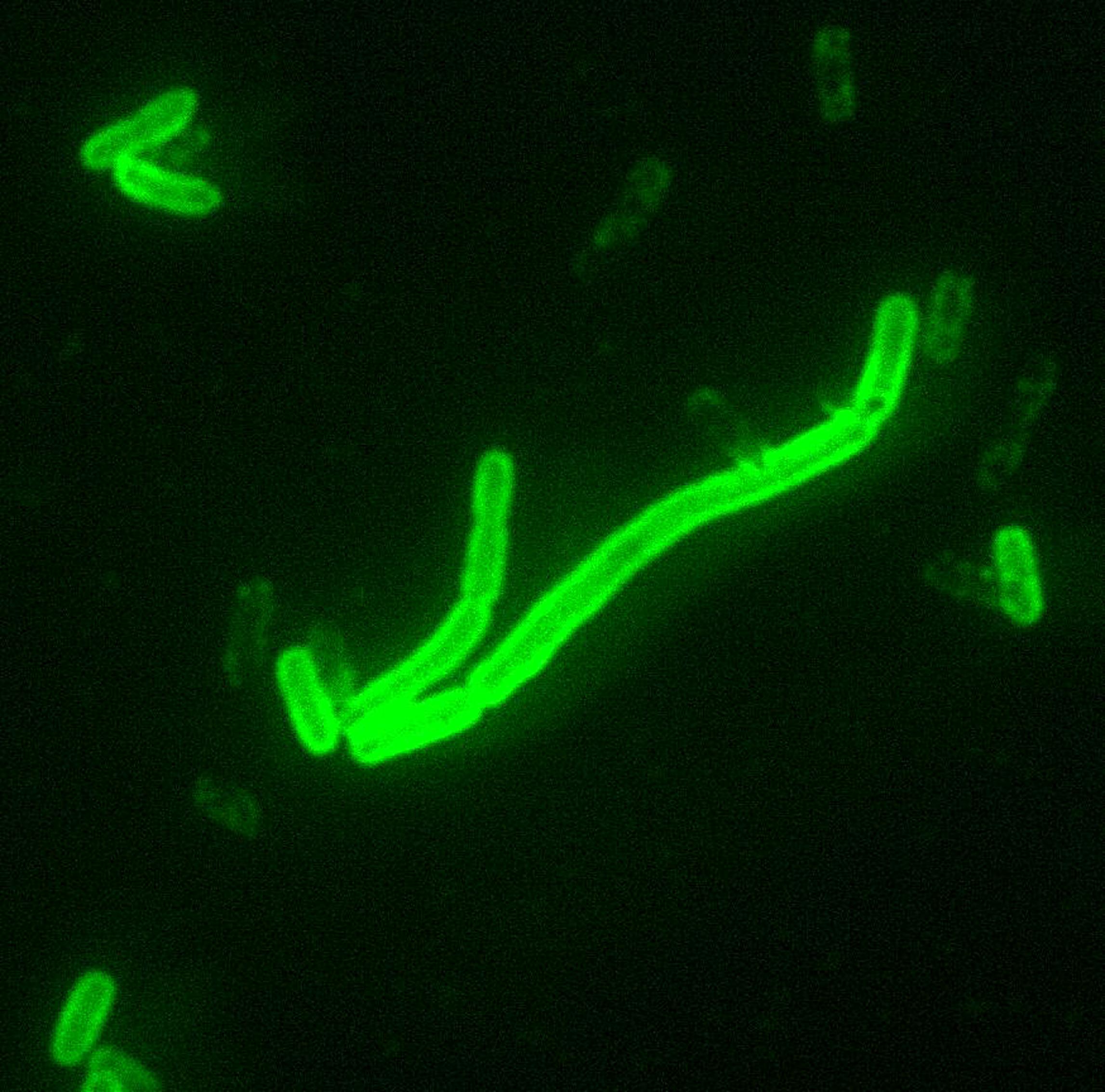
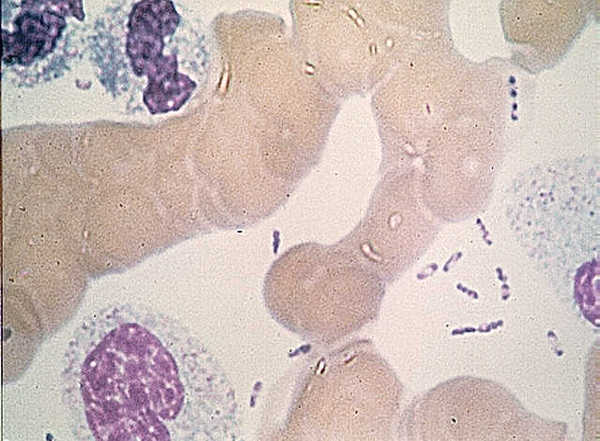
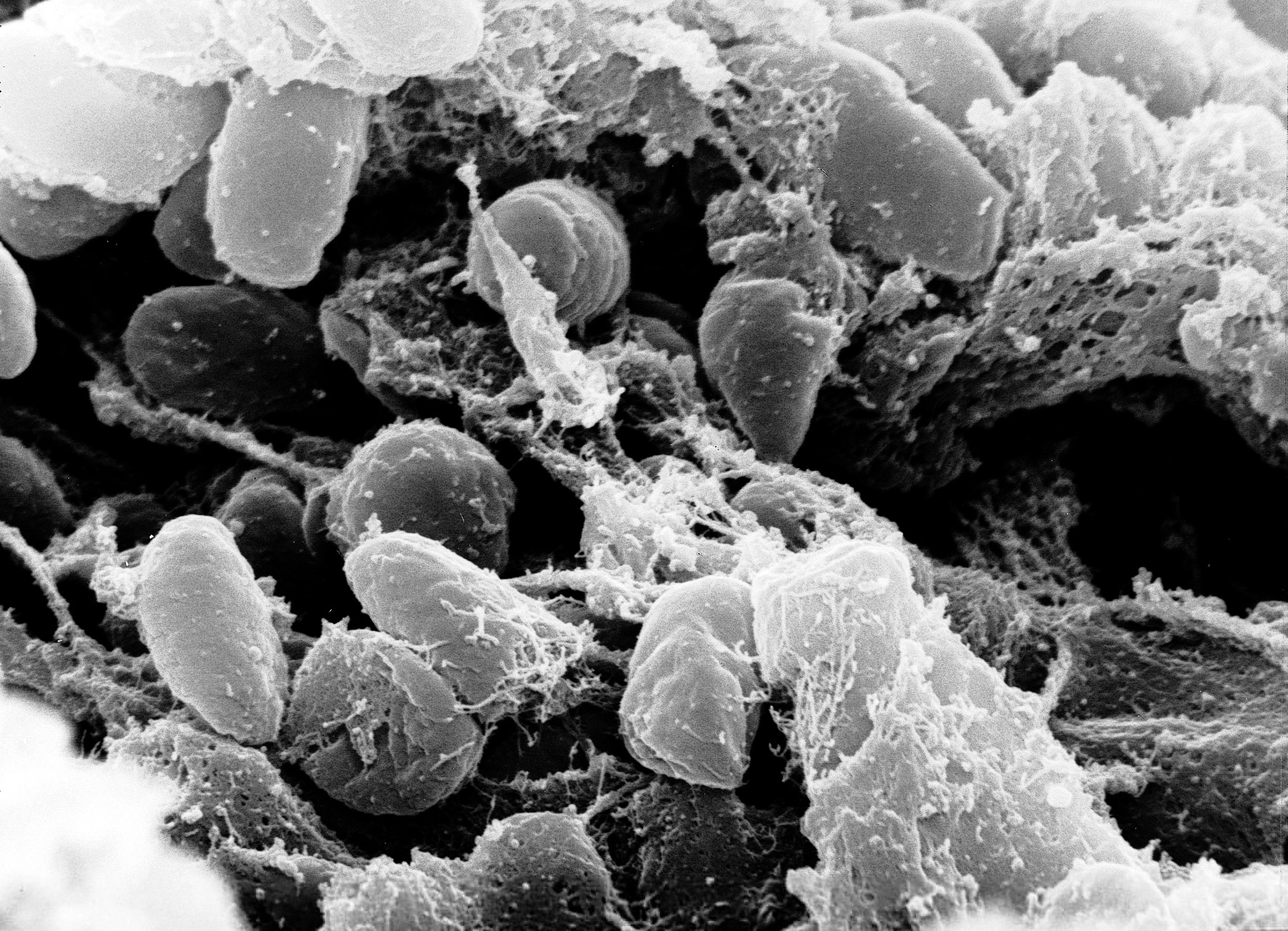
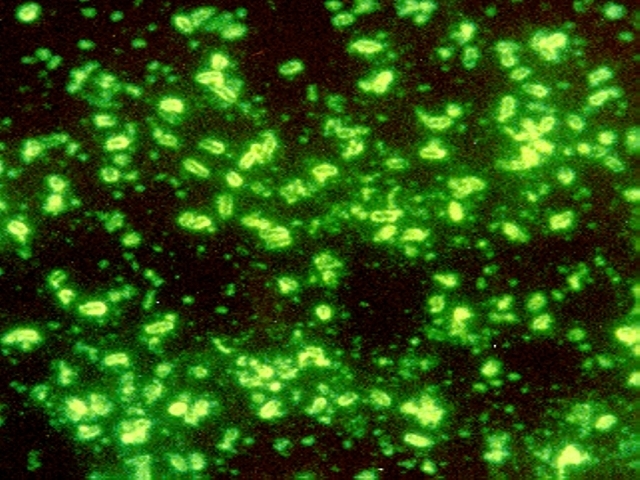
Image source: Wikipedia/Wikimedia
| Ecology, Host, and Life Cycle | |
|---|---|
| Oxygen requirements | Facultative anaerobe |
| Optimal temperature | 28 |
| Temperature range | Mesophilic |
| Habitat | Multiple |
| Biotic relationship | Free living |
| Host(s) | Homo sapiens, Siphonaptera, Metazoa |
| Cell arrangement | Singles |
| Sporulation | Not Available |
| Energy source | Heterotroph |
| Pathogenicity | Not Available |
Gene Summary
Adenine Count
Not Available
Thymine Count
Not Available
Guanine Count
Not Available
Cytosine Count
Not Available
Genome Length
Not Available
Protein-coding Genes
3661 genes
Non-Coding Genes
188 genes
# of Chromosomes/Plasmids
4
Genes
| Name | Locus Tag | UniProt ID | Strand Orientation | Gene Start/End | Protein Molecular Weight |
|---|---|---|---|---|---|
| putative thur, regulatory protein for trehalosemaltose transport | NCTC144_00620 | Not Available | Negative | 632161 - 632418 | 9569.49 |
| transposase/is protein | NCTC144_00621 | Not Available | Negative | 632434 - 633213 | 29296.6 |
| is100 orf1 | NCTC144_00622 | Not Available | Negative | 633213 - 634235 | 39903.2 |
| transcriptional regulator | NCTC144_00623 | Not Available | Negative | 634249 - 635136 | 32275.1 |
| transposase for the is285 insertion element | NCTC144_00624 | Not Available | Negative | 635611 - 636819 | 45672.1 |
| pectin degradation protein | NCTC144_00625 | Not Available | Negative | 636867 - 637217 | 13184.8 |
| 5-keto-4-deoxyuronate isomerase | NCTC144_00626 | Not Available | Positive | 637553 - 638389 | 31085.1 |
| 2-deoxy-d-gluconate 3-dehydrogenase | NCTC144_00627 | Not Available | Positive | 638481 - 639242 | 27396.0 |
| exopolygalacturonate lyase | NCTC144_00628 | Not Available | Positive | 639578 - 641245 | 63702.6 |
| putative abc sugar transporter (permease) | NCTC144_00629 | Not Available | Positive | 641286 - 642176 | 33389.9 |
Pathways
1291 pathways
Health Effects
| Health Condition | Relation | Reference |
|---|---|---|
| Plague | Causes | PMC10229654 |
| Bubonic plague | Causes | PMC10229654 |
| Septicaemic plague | Causes | PMC10229654 |
| Pneumonic plague | Causes | PMC10229654 |
| Justinianic plague | Causes | PMC10229654 |
| Black death | Causes | PMC10229654 |
| Plague | Causes | PMC3047566 |
| Black death | Causes | PMC3216949 |
| Plague | Causes | PMC3216949 |
| Plague | Causes | PMC4644222 |