Kingdom
Pseudomonadati
Phylum
Pseudomonadota
Class
Gammaproteobacteria
Order
Enterobacterales
Family
Yersiniaceae
Genus
Yersinia
Description
Taxonomy
| Kingdom | Pseudomonadati |
|---|---|
| Phylum | Pseudomonadota |
| Class | Gammaproteobacteria |
| Order | Enterobacterales |
| Family | Yersiniaceae |
| Genus | Yersinia |
| Species | Yersinia pestis |
| Strain | No strain |
Profile
| Physiology | |
|---|---|
| Gram staining properties | Negative |
| Shape | Rod |
| Mobility | Yes |
| Flagellar presence | Yes |
| Number of membranes | 2 |

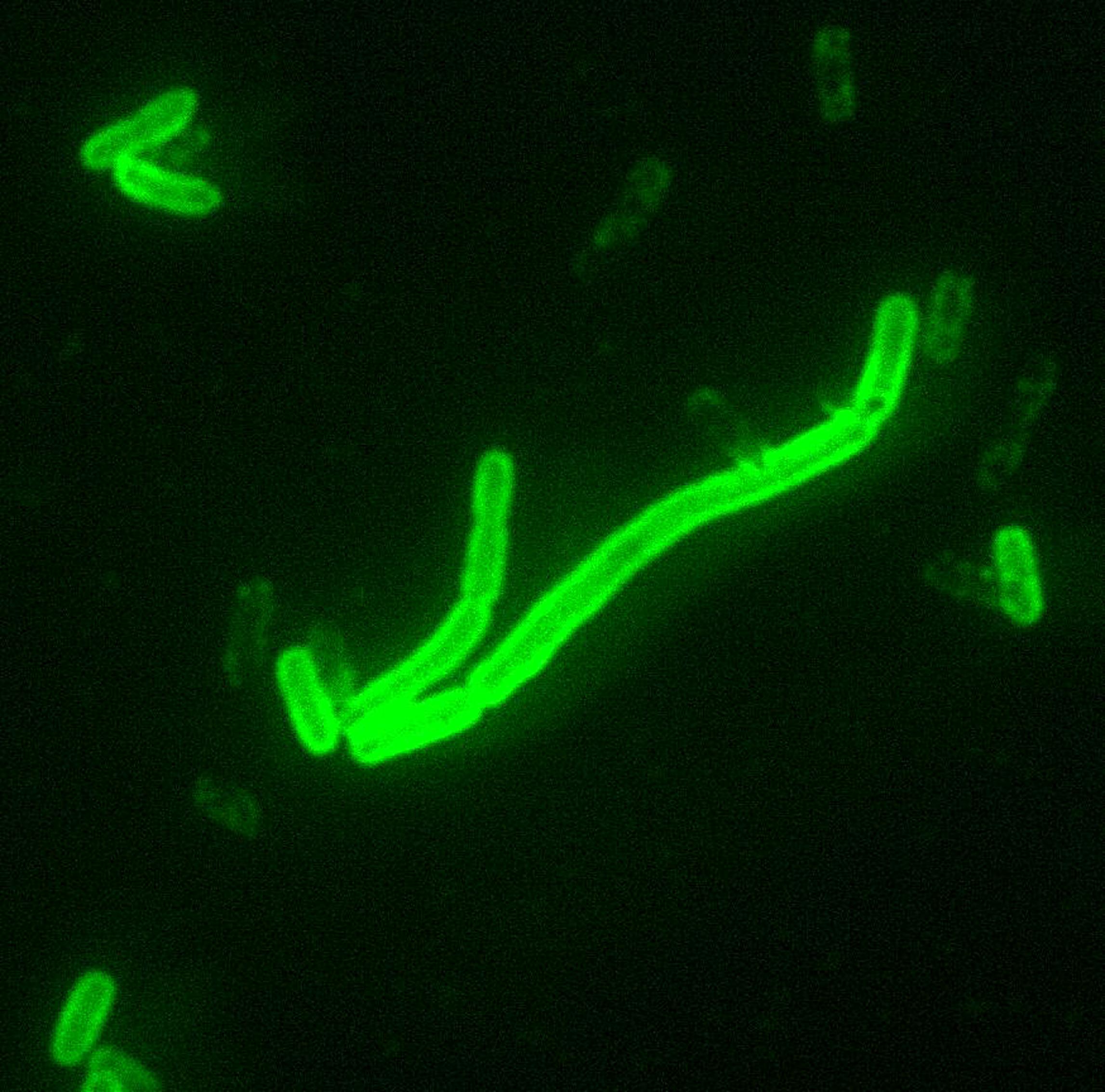
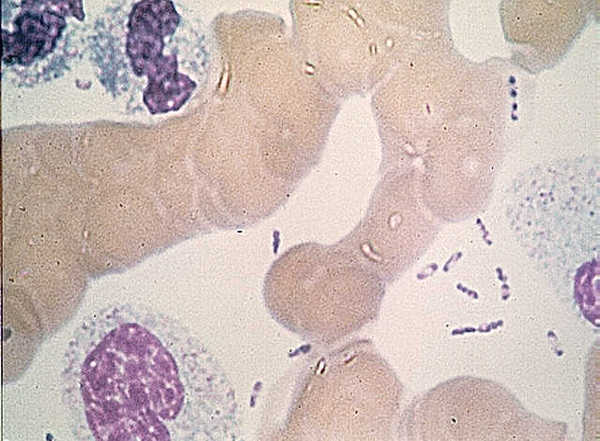
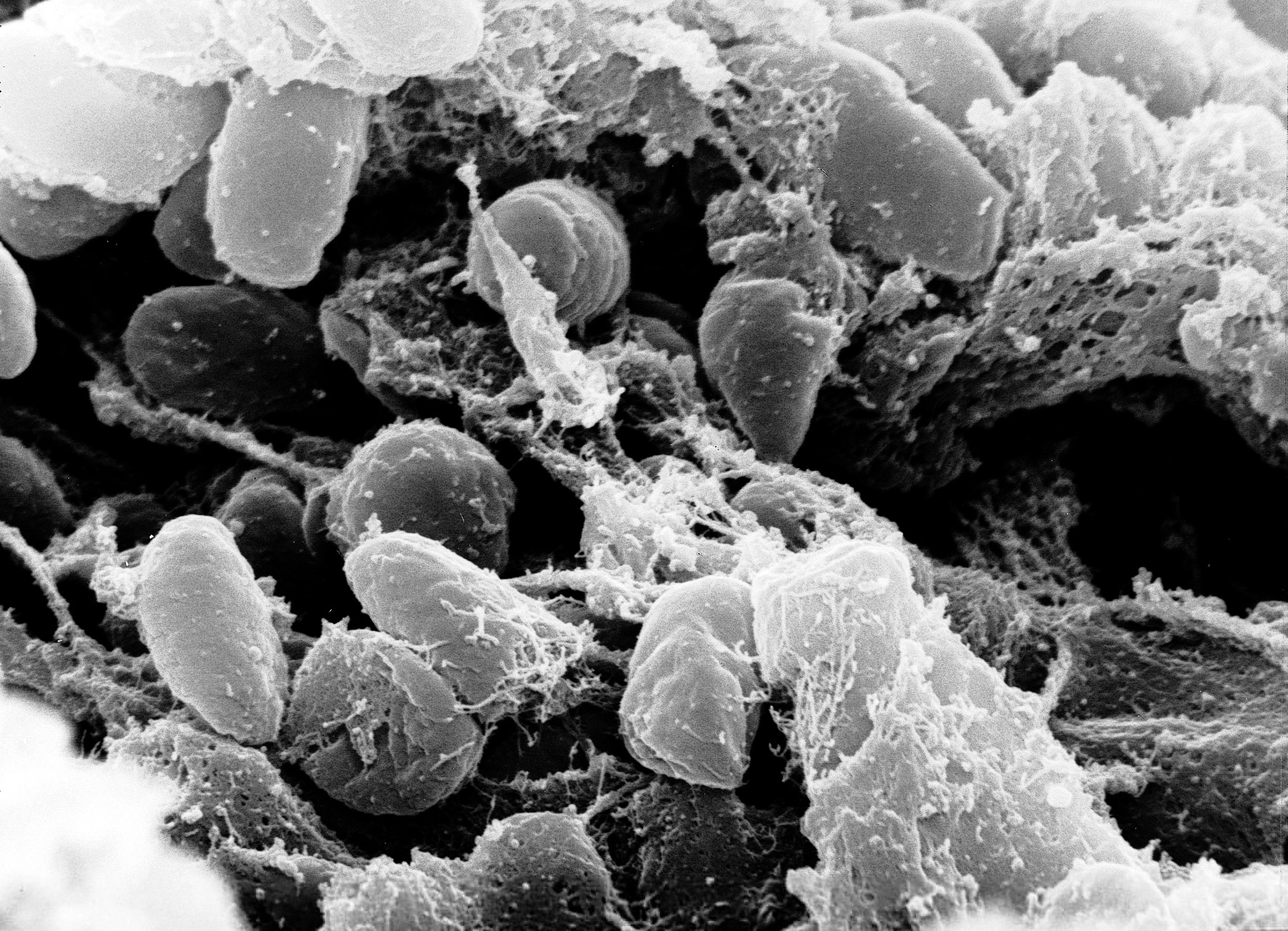
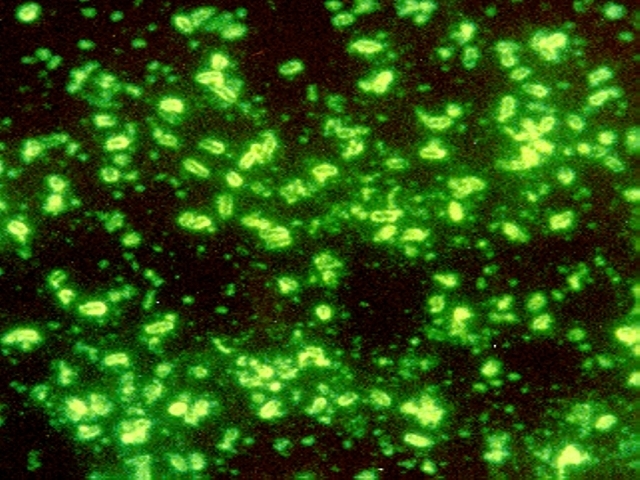
Image source: Wikipedia/Wikimedia
| Ecology, Host, and Life Cycle | |
|---|---|
| Oxygen requirements | Facultative anaerobe |
| Optimal temperature | 28 |
| Temperature range | Mesophilic |
| Habitat | Multiple |
| Biotic relationship | Free living |
| Host(s) | Homo sapiens, Siphonaptera, Metazoa |
| Cell arrangement | Singles |
| Sporulation | Not Available |
| Energy source | Heterotroph |
| Pathogenicity | Not Available |
Gene Summary
Adenine Count
Not Available
Thymine Count
Not Available
Guanine Count
Not Available
Cytosine Count
Not Available
Genome Length
Not Available
Protein-coding Genes
3661 genes
Non-Coding Genes
188 genes
# of Chromosomes/Plasmids
4
Genes
| Name | Locus Tag | UniProt ID | Strand Orientation | Gene Start/End | Protein Molecular Weight |
|---|---|---|---|---|---|
| putative sugar-binding periplasmic protein | NCTC144_00536 | Not Available | Negative | 550124 - 551119 | 35615.1 |
| abc transporter permease | NCTC144_00537 | Not Available | Negative | 551162 - 552241 | 38286.3 |
| uncharacterised protein | NCTC144_00538 | Not Available | Negative | 552238 - 552393 | 5852.0 |
| short chain dehydrogenase | NCTC144_00539 | Not Available | Negative | 552371 - 554437 | 73849.8 |
| transcriptional regulator | NCTC144_00540 | Not Available | Positive | 554655 - 555656 | 36351.0 |
| flagellar hook-associated protein flgl | NCTC144_00541 | Not Available | Negative | 555685 - 556665 | 35002.7 |
| flagellar hook-associated protein flgk | NCTC144_00542 | Not Available | Negative | 556804 - 558468 | 59008.9 |
| flagellar rod assembly protein/muramidase flgj | NCTC144_00543 | Not Available | Negative | 559339 - 560283 | 33617.0 |
| flagellar basal body p-ring protein | NCTC144_00544 | Not Available | Negative | 560283 - 561392 | 38466.6 |
| flagellar basal body l-ring protein | NCTC144_00545 | Not Available | Negative | 561407 - 562096 | 24445.8 |
Pathways
1291 pathways
Health Effects
| Health Condition | Relation | Reference |
|---|---|---|
| Plague | Causes | PMC10229654 |
| Bubonic plague | Causes | PMC10229654 |
| Septicaemic plague | Causes | PMC10229654 |
| Pneumonic plague | Causes | PMC10229654 |
| Justinianic plague | Causes | PMC10229654 |
| Black death | Causes | PMC10229654 |
| Plague | Causes | PMC3047566 |
| Black death | Causes | PMC3216949 |
| Plague | Causes | PMC3216949 |
| Plague | Causes | PMC4644222 |