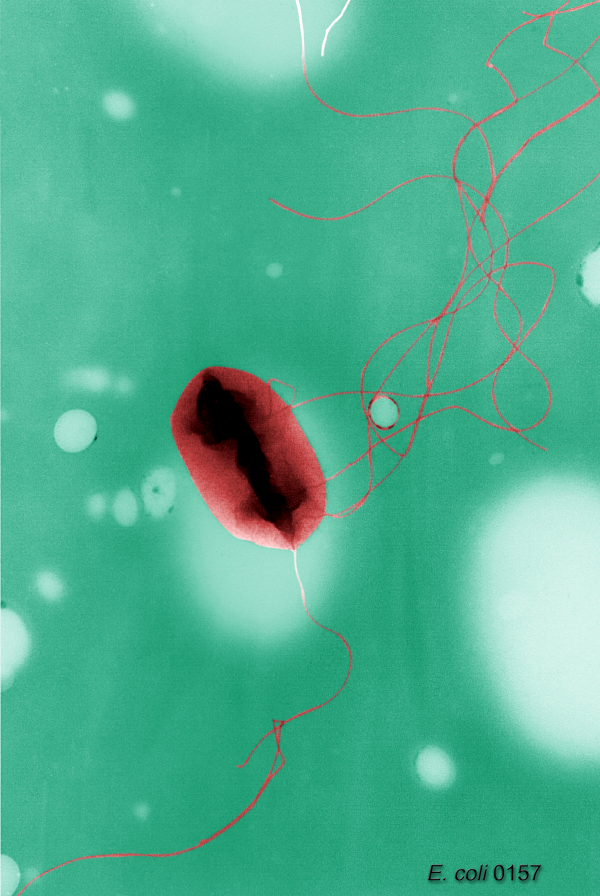
Escherichia coli str. K-12 substr. MG1655

Gram-negativeRodMotileFacultative anaerobe

Kingdom

Pseudomonadati

Phylum

Proteobacteria

Class

Gammaproteobacteria

Order

Enterobacteriales

Family

Enterobacteriaceae

Genus

Escherichia

Description

Escherichia coli str. K-12 substr. MG1655 is a gram-negative, rod-shaped bacterium that thrives at mesophilic temperatures, is categorized as a chemoheterotroph, and is classified as a facultative anaerobe. This versatile organism is found in diverse environments, including the intestines of warm-blooded organisms, soil, and water, illustrating its adaptability to various ecosystems. The gram-negative nature of E. coli K-12 MG1655 is characterized by a thin peptidoglycan layer surrounded by an outer membrane containing lipopolysaccharides, which contributes to its pathogenic potential in some strains. The rod shape of this bacterium allows for efficient motility, facilitated by flagella, enabling it to navigate through various environments. Being a mesophilic organism, it prefers a temperature range of approximately 20-45°C, making it well-suited for survival in the gut of mammals where temperatures are typically around 37°C. As a chemoheterotroph, E. coli K-12 MG1655 derives its energy from the consumption of organic compounds, making it reliant on external sources of carbon for growth and metabolism. This bacterium's facultative anaerobic nature allows it to adapt to both aerobic and anaerobic conditions, enabling it to thrive in the oxygen-rich environment of the intestine and switch to fermentation in low-oxygen scenarios. Beyond its ecological importance, E. coli K-12 MG1655 serves as a cornerstone in molecular biology and biotechnology. It is often employed as a model organism for laboratory studies due to its rapid growth rate, ease of genetic manipulation, and safety compared to pathogenic strains. This strain has significantly contributed to advancements in genetic engineering, synthetic biology, and pharmaceuticals, exemplifying its role as a vital tool in scientific research and industrial applications.

Taxonomy

KingdomPseudomonadati
PhylumProteobacteria
ClassGammaproteobacteria
OrderEnterobacteriales
FamilyEnterobacteriaceae
GenusEscherichia
SpeciesEscherichia coli
StrainMG1655

Profile

Physiology
Gram staining propertiesNegative
ShapeRod
MobilityYes
Flagellar presenceYes
Number of membranes2
Image of Escherichia coli str. K-12 substr. MG1655
Ecology, Host, and Life Cycle
Oxygen requirementsFacultative anaerobe
Optimal temperature37
Temperature rangeMesophilic
HabitatHostAssociated
Biotic relationshipFree living
Host(s)Homo sapiens
Cell arrangementPairs - Singles
SporulationNonsporulating
Energy sourceNot Available
PathogenicityNot Available

Genome Summary

Escherichia coli str. K-12 substr. MG1655

Accession NumberNC_000913.3

Gene Summary

Adenine Count

1142742 bp

Thymine Count

1141382 bp

Guanine Count

1177437 bp

Cytosine Count

1180091 bp

Genome Length

4641652 bp

Protein-coding Genes

4224 genes

Non-Coding Genes

210 genes

# of Chromosomes/Plasmids

2

Genes

NameLocus TagUniProtStrandCoordinatesMolecular Weight
uncharacterized protein ylchb4588Q47268+572368 - 5724693644.39
Hypothetical proteinb0547Q47269+572466 - 57292117434.0
Nineb0548Q47270+572921 - 5730916494.14
Hypothetical proteinb0549P68662+573084 - 57337410348.6
Holliday junction resolvase rusab0550A1AA51+573371 - 57373313846.7
Hypothetical proteinb4509Q47272+573730 - 5738705493.84
Antitermination protein qb0551Q47274+573956 - 57433914177.3
putative outer membrane porin nmpcb0553P21420-574529 - 57682582394.4
Is5 transposase and trans-activatorb0552Not Available-574737 - 57571737853.6
Putative holinb0554P0A9R3+577398 - 5776137778.49

Displaying genes 11 – 20 of 4434 in total

Pathways

1847 pathways

Metabolites

935 records
Metabolite IDMetabolite nameStructureCAS number
BASm0000217alpha-ribazoleC14H18N2O4Chemical structure of alpha-ribazoleNot available
Average278.3037Da
Monoisotopic278.126657074Da
BASm0000237(R)-4'-phosphopantothenateC9H18NO8PChemical structure of (R)-4'-phosphopantothenateNot available
Average299.2149Da
Monoisotopic299.0770031Da
BASm00002502,5-didehydro-D-gluconateC6H7O7Chemical structure of 2,5-didehydro-D-gluconate53736-12-2
Average191.1156Da
Monoisotopic191.019177578Da
BASm00002512-dehydropantoateC6H9O4Chemical structure of 2-dehydropantoateNot available
Average145.1333Da
Monoisotopic145.050083776Da
BASm00002532-oxopent-4-enoateC5H5O3Chemical structure of 2-oxopent-4-enoateNot available
Average113.093Da
Monoisotopic113.024417601Da
BASm00002593alpha,12alpha-dihydroxy-7-oxo-5beta-cholanateC24H37O5Chemical structure of 3alpha,12alpha-dihydroxy-7-oxo-5beta-cholanateNot available
Average405.556Da
Monoisotopic405.264647871Da
BASm0000274aldehydo-D-galacturonateC6H9O7Chemical structure of aldehydo-D-galacturonateNot available
Average193.132Da
Monoisotopic193.0353762Da
BASm0000377(S)-malateC4H4O5Chemical structure of (S)-malateNot available
Average132.0716Da
Monoisotopic132.005873238Da
BASm0000387(6R)-5,10-methylene-5,6,7,8-tetrahydrofolateC20H21N7O6Chemical structure of (6R)-5,10-methylene-5,6,7,8-tetrahydrofolateNot available
Average455.432Da
Monoisotopic455.1564286Da
BASm0000399(S)-allantoinC4H6N4O3Chemical structure of (S)-allantoin97-59-6
Average158.1154Da
Monoisotopic158.0439901Da

Displaying 1–10 of 935 metabolites